Top 10 Food Processing Techniques You Should Know?

The world of food processing is vast and essential. According to the Food and Agriculture Organization (FAO), food processing accounts for about 30% of the global food industry. This sector significantly influences food safety, shelf life, and nutritional value. Technological advancements are redesigning traditional methods. Yet, with innovation comes debate over health impacts. Many food processing methods, like refining and pasteurization, alter nutrient profiles.

Consumers are increasingly concerned about what they eat. A recent survey showed that 56% of people prefer minimally processed foods. This shift highlights a disconnect in expectations versus reality in food processing. While processing extends product longevity, it may also reduce essential nutrients. Hence, understanding the top techniques in food processing is vital for informed choices.

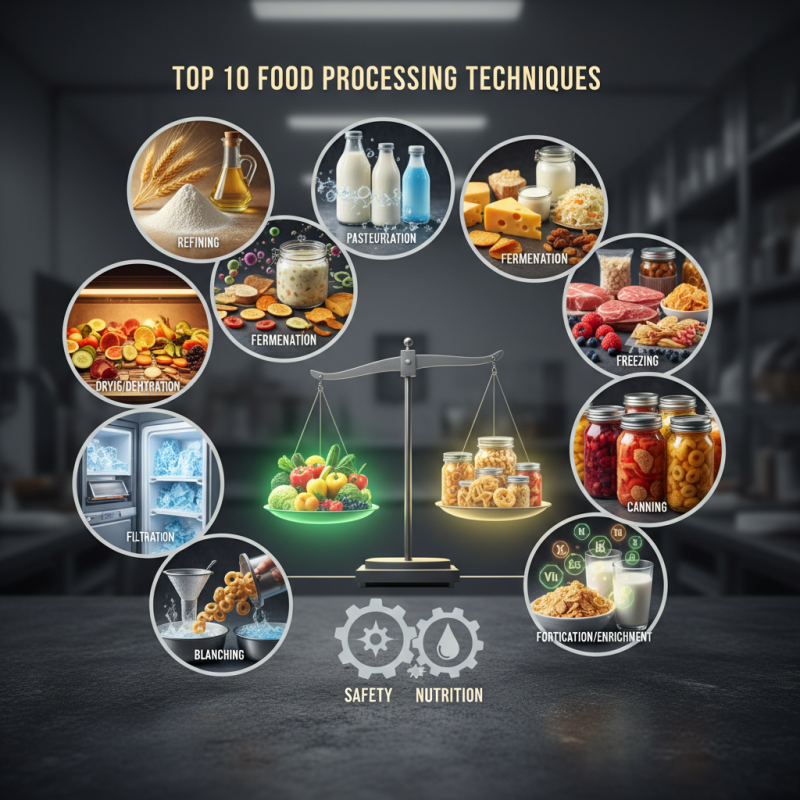
To make the best decisions, one must navigate the pros and cons of each method. The food industry continually seeks a balance. Can we enhance safety while preserving nutrition? The answer lies in mastering these techniques.
Top 10 Food Processing Techniques You Should Know?

Understanding Food Processing: An Overview

Food processing encompasses a variety of techniques used to prepare and preserve food. According to a 2022 report by the Food Processing Association, over 80% of the world’s food supply undergoes some form of processing. This includes methods like freezing, drying, and fermentation, which can enhance shelf life and nutritional value.

Many consumers misunderstand food processing. It is not just about convenience; it can also improve safety. Pasteurization, for example, reduces harmful bacteria in dairy and juices. A survey from the Food Safety Institute indicated that 70% of consumers prefer processed foods for their reliability. However, there's a growing concern regarding additives. Some studies suggest that excessive processing can lead to health risks, such as obesity and high blood pressure.

Not all processed food is bad, but choices matter. Whole foods that are minimally processed retain more nutrients. As the global population continues to rise, we must reflect on our processing methods. Sustainable practices are crucial. The industry must innovate to balance preservation and health benefits while minimizing environmental impacts.


Common Techniques in Food Preservation

Top 10 Food Processing Techniques You Should Know?

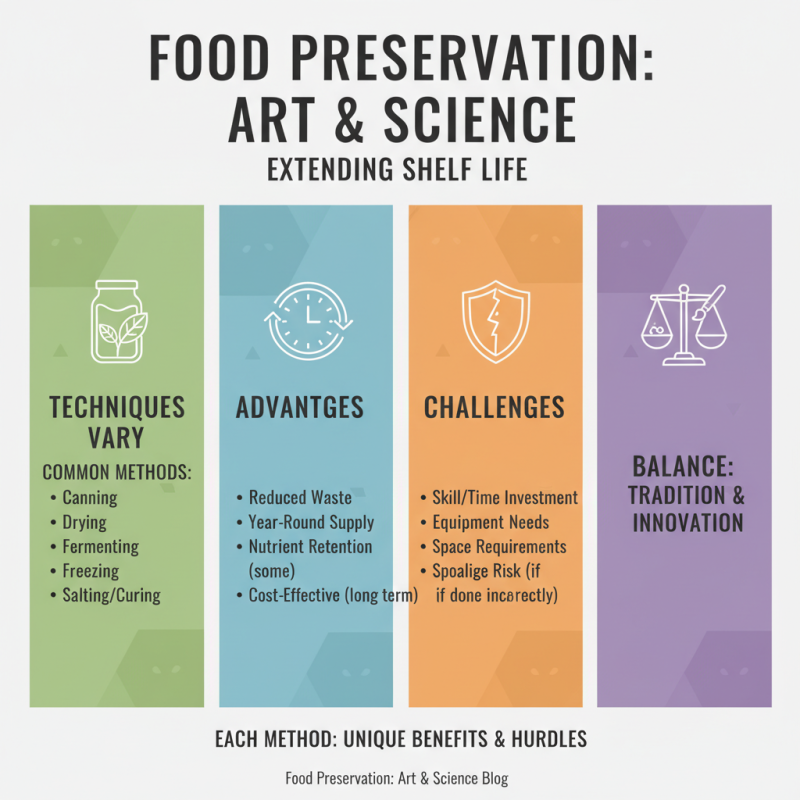
Food preservation is an art and science. It extends the shelf life of products. Techniques vary widely, yet some are more common than others. Each method has its advantages and challenges.

Canning is a popular choice. This process involves sealing food in jars and heating them. It sounds simple, but it requires precision. A wrong temperature can spoil a batch. Fermentation is another fascinating technique. It transforms flavors and adds probiotics. Yet, it demands patience. Improper fermentation can lead to undesirable results.

Freezing is effective and easy. Many foods freeze well, preserving taste and nutrients. However, not all items freeze equally. Texture may change, which can affect quality. Dehydration removes moisture, extending shelf life too. But be careful; over-drying can make food taste bland. Each technique requires practice to master.

The Role of Heat in Food Processing

Heat plays a vital role in food processing. It can enhance flavor, improve texture, and ensure food safety. Different techniques use heat in unique ways. For example, boiling vegetables retains their nutrients while softening them for consumption. Baking, on the other hand, brings out deep flavors in bread and pastries.

Tip: Always monitor temperatures closely. Overheating can lead to loss of nutrients. A little too much heat can ruin the dish. Flash heating in methods like stir-frying allows quick cooking while preserving taste and texture.

Certain foods react unpredictably to heat. For instance, proteins denature when heated, changing texture and taste. This raises questions about timing and temperature. Excessive heat can lead to dryness, while insufficient heat may not kill harmful bacteria. It’s a balancing act that requires attention.

Tip: Use a food thermometer for accuracy. It removes guesswork and enhances food safety. Experiment with different heating techniques to discover exciting flavor combinations. Each method might reveal a unique aspect of your ingredients that you didn’t expect. Adjust and refine your approach over time.

Exploring Fermentation in Food Production

Fermentation is an ancient technique that transforms food on a molecular level. This process relies on microorganisms like bacteria, yeast, and molds. They can convert sugars into acids, gases, or alcohol. The flavors and textures of fermented foods are unique and complex. Think of the tang in yogurt or the bubbly fizz in kombucha.

While fermentation is fascinating, it’s not always straightforward. The risk of contamination requires careful monitoring. A poorly executed fermentation can spoil food or even produce harmful substances. Many home fermenters face challenges like inconsistent temperatures and timing. This unpredictability can be both frustrating and enlightening.

Fermented foods also offer health benefits. Probiotics aid digestion and enhance gut health. However, not all fermented products are created equal. Many commercial versions contain preservatives or added sugars. Home fermentation can offer a more natural alternative, but it demands patience and practice. Understanding the nuances of this technique can lead to delicious and nutritious results.

Top 10 Food Processing Techniques: Exploring Fermentation in Food Production

Innovations in Food Processing Technologies

The food processing industry is evolving rapidly. New technologies are transforming how we create and preserve food. One exciting innovation is the use of high-pressure processing. This method maintains the food’s fresh taste while extending its shelf life. It sounds perfect, right? Yet, the cost of equipment can be a barrier for small businesses.

Another noteworthy advancement is the use of artificial intelligence in food tracking. AI algorithms can optimize supply chains and reduce waste. They analyze data to predict consumer behavior. However, reliance on technology can lead to a lack of personal touch. Many businesses may lose the human element in their service.

Moreover, fermentation techniques are gaining traction. These processes not only enhance flavors but also add probiotics that benefit health. Still, there's the risk of uncontrolled microbial growth. Proper training and safety measures are crucial for success in fermentation. As technology advances, keeping a balance between innovation and tradition becomes essential for the industry.

Top 10 Food Processing Techniques You Should Know

Technique Description Benefits Commonly Used In
Pasteurization Heating food to kill harmful bacteria Increases shelf life, improves safety Dairy, juices, canned foods
Freeze Drying Removing moisture from food through freezing Retains nutrients, lightweight products Fruits, instant coffee, meals
Fermentation Using microorganisms to convert sugars to acids or alcohol Enhances flavor, improves digestibility Bread, yogurt, beer
Extrusion Forcing food through a mold to create shapes Creates diverse textures, cooking during processing Snack foods, cereals, pet food
Ultrasonic Processing Using ultrasonic waves to enhance food interactions Improves extraction, enhances emulsification Juices, dairy, sauces
Hot Water Treatment Short heating in hot water to reduce microbial load Preserves color, texture and taste Vegetables, fruits, shell eggs
High Pressure Processing (HPP) Applying high pressure to kill bacteria Maintains nutrients, color, and flavor Juices, ready-to-eat meals, guacamole
Dehydration Removing moisture to preserve food Lightweight, long shelf life Fruits, vegetables, herbs
Chilling and Freezing Lowering temperature to slow spoilage Maintains freshness, prevents microbial growth Meats, fish, frozen meals