International sourcing is entering a more demanding era. The best global food suppliers must deliver quality, traceability, resilience, and consistent documentation. Price alone is no longer enough.
The FAO Food Outlook 2024 estimated the global food import bill at approximately US$2.1 trillion. That figure reflects enormous demand, but also serious exposure to freight costs, weather shocks, currency changes, and regional conflicts. The OECD-FAO Agricultural Outlook 2024–2033 projects global agricultural and fish production to grow by about 1.1% annually. Buyers therefore need suppliers prepared for volume and volatility.
As Johan Swinnen, Director General of the International Food Policy Research Institute, has stated, “Trade is a key component of food security.” This principle matters on a warehouse floor. A reliable supplier should provide batch codes, laboratory results, origin records, allergen controls, and realistic delivery schedules. Certifications such as HACCP, ISO 22000, BRCGS, and relevant local approvals can strengthen confidence, but certificates are not magic.
They require verification.
This guide examines leading global food suppliers for international buyers in 2026. It considers production capacity, export experience, product consistency, sustainability practices, and communication quality. It also reviews less visible risks, including incomplete specifications, weak recall procedures, and unclear ownership of quality claims. No ranking is perfect. Supplier performance can change after one poor harvest or one delayed shipment. Buyers should still conduct audits, request samples, and confirm compliance for every target market before signing contracts.
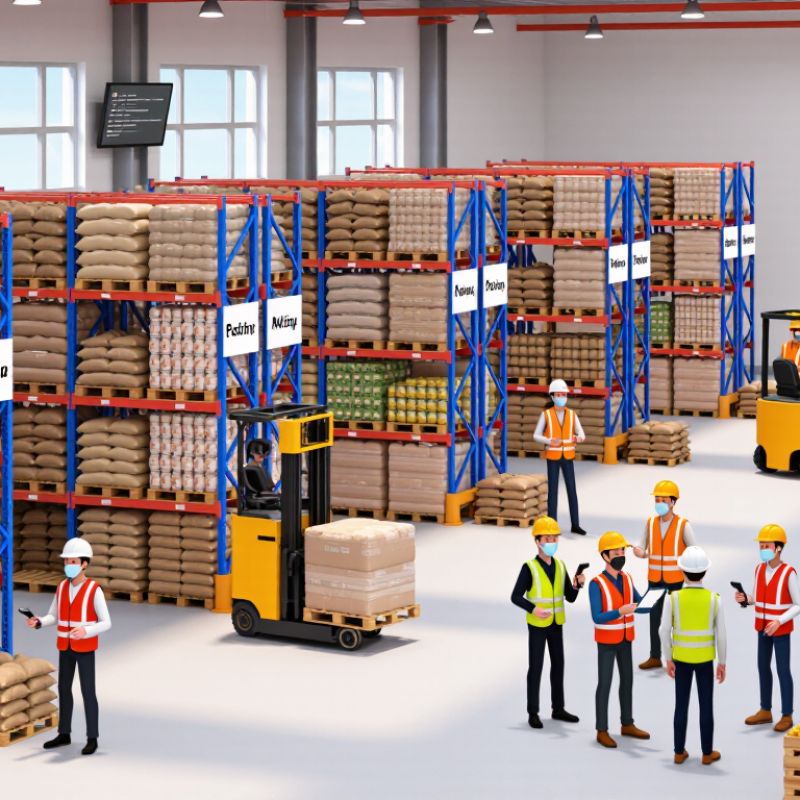
In 2026, a global food supplier is more than a company selling ingredients across borders. It connects verified producers, processors, logistics partners, and international buyers. Its role includes sourcing, quality control, export documents, temperature management, and delivery planning. A reliable supplier can show where products originated, how they were handled, and when custody changed. Traceability matters. It protects product integrity and supports faster responses when quality issues appear.
For international buyers, supplier value is measured through evidence, not attractive promises. Buyers should review food safety certifications, laboratory results, allergen controls, origin records, and recall procedures. They should examine cold-chain data for frozen seafood, dairy, or prepared foods. A shipment may leave a clean facility. It can still face delays at a port. Strong suppliers prepare alternate routes, realistic lead times, and clear communication during disruptions. They understand destination-market requirements without treating compliance as paperwork alone.
Digital tools are reshaping this role in 2026. Shared records, batch-level tracking, and automated alerts improve visibility from farm to warehouse. However, technology is not proof by itself. A polished dashboard may hide incomplete data or weak verification. Experienced buyers still ask direct questions, inspect records, and compare delivered quality with agreed specifications. This review can be slow. It remains necessary. Suppliers should document deviations, investigate causes, and adjust processes before the next shipment.
| No. | Data Dimension | Evidence-Based Reference Point | Role of a Global Food Supplier | International Buyer Application | Reference |
|---|---|---|---|---|---|
| 1 | Definition | A global food supplier is an organization that provides food, ingredients, or agricultural products across national borders and manages production, documentation, logistics, and compliance. | Connects producers with importers, distributors, food-service operators, retailers, and manufacturers in different jurisdictions. | Use the definition to separate a true export-capable supplier from a local-only producer or trading intermediary. | Codex trade and food-control principles |
| 2 | Product Scope | Typical international categories include grains, pulses, oilseeds, fresh produce, seafood, meat, dairy, beverages, processed foods, food ingredients, and specialty agricultural products. | Provides category expertise, product specifications, packing formats, labeling information, and export documentation. | Compare suppliers by product form, grade, origin, processing level, minimum order quantity, and permitted destination markets. | International food trade classification practice |
| 3 | Food Loss | FAO estimates that approximately 13% of food is lost globally between post-harvest and the retail stage, although the rate varies significantly by commodity and region. | Reduces loss through grading, suitable packaging, storage control, inventory planning, and efficient transport. | Request loss-rate data, packaging specifications, temperature records, and shipment-level quality checks. | FAO Food Loss Index |
| 4 | Food Waste | The United Nations Environment Programme reported approximately 1.05 billion tonnes of food waste generated in 2022 across households, food service, and retail. | Supports demand forecasting, smaller or flexible pack sizes, redistribution programs, and better stock rotation. | Evaluate suppliers using sell-through planning, remaining shelf life, return policies, and waste-reduction reporting. | UNEP Food Waste Index Report 2024 |
| 5 | Food Security Role | Approximately 733 million people faced hunger in 2023, according to the United Nations food-security assessment. | Improves availability by diversifying sourcing regions, maintaining continuity plans, and supporting stable cross-border food flows. | Prioritize suppliers with multi-origin sourcing, alternative transport routes, and documented business-continuity procedures. | UN SOFI 2024 |
| 6 | Water and Resource Efficiency | Agriculture accounts for about 70% of global freshwater withdrawals, with substantial variation among countries and production systems. | Measures irrigation efficiency, water risk, crop suitability, wastewater management, and resource use in processing. | Ask for water-risk assessments, production-area information, and measurable resource-efficiency targets. | FAO AQUASTAT |
| 7 | Food Safety Management | HACCP is based on seven principles, including hazard analysis, critical control points, critical limits, monitoring, corrective action, verification, and recordkeeping. | Controls biological, chemical, and physical hazards throughout production, processing, storage, and distribution. | Review hazard plans, audit reports, laboratory results, corrective-action records, and product-specific control points. | Codex HACCP principles |
| 8 | Traceability | International food-control systems commonly expect businesses to identify immediate suppliers and immediate commercial customers, enabling product tracing through the supply chain. | Maintains lot codes, production dates, origin information, shipment records, and recall procedures. | Require one-step-back and one-step-forward records, digital batch data, and a tested recall process. | Codex General Principles of Food Hygiene |
| 9 | Cold-Chain Control | Chilled and frozen foods require controlled temperatures that depend on the product, regulation, and validated safety or quality requirements; approximately 0–5°C for many chilled products and −18°C or below for many frozen products are common operating targets. | Protects safety, texture, freshness, and shelf life during storage, loading, transit, customs clearance, and final delivery. | Request calibrated temperature records, loading procedures, contingency plans, and evidence of temperature integrity. | Product-specific Codex and national requirements |
| 10 | International Trade Compliance | The WTO Sanitary and Phytosanitary Agreement has governed international food, animal, and plant health measures since entering into force in 1995. | Prepares health certificates, phytosanitary documents, customs information, origin records, and destination-market compliance files. | Check import permits, residue limits, allergen rules, labeling requirements, tariff classification, and required certificates before purchase. | WTO SPS Agreement |
| 11 | Packaging and Labeling | International labels generally need accurate product identity, ingredient information, allergen declarations where applicable, net quantity, lot identification, storage conditions, and date marking according to the destination market. | Uses packaging that protects food, supports traceability, withstands transport, and meets destination-market labeling rules. | Approve artwork and master specifications before production; verify translations, units of measure, and regulatory declarations. | Codex food-labeling principles |
| 12 | Commercial Delivery Terms | The current ICC Incoterms rules contain 11 standardized trade terms that allocate responsibilities, costs, and risks between sellers and buyers. | Clarifies who arranges transport, insurance, export clearance, import clearance, and delivery to the agreed location. | Compare landed cost rather than product price alone, and confirm the transfer point for transport risk. | ICC Incoterms 2020 |
| 13 | Supplier Evaluation Criteria | A practical evaluation model should cover food safety, regulatory compliance, product consistency, capacity, lead time, logistics, traceability, sustainability, financial stability, and communication. | Turns supplier selection into a documented, risk-based process instead of relying only on price or product samples. | Use weighted scoring, sample approval, document verification, pilot orders, and periodic performance reviews. | International procurement best practice |
| 14 | Best-Supplier Profile for 2026 | The strongest supplier profile combines verified food-safety controls, transparent traceability, export experience, resilient logistics, measurable sustainability practices, and reliable communication. | Provides continuity, transparency, compliance support, and predictable quality in a more regulated and disruption-sensitive global market. | Select suppliers that can provide complete documentation, consistent specifications, contingency plans, and auditable performance data. | 2026 buyer assessment framework |