
Choosing Sodium Bisulfate for global sourcing is more complex than comparing prices on a supplier spreadsheet. Buyers must examine purity, moisture, particle size, packaging strength, production capacity, and shipment stability. These details affect water treatment, pH adjustment, cleaning formulations, mining processes, and other industrial applications.
Peter Kraljic, a recognized procurement strategist, wrote, “Purchasing must become supply management.” His principle remains practical for Sodium Bisulfate buyers. A dependable supplier should provide consistent specifications, traceable batch records, current SDS documents, and a clear Certificate of Analysis. Those documents should match the actual material delivered. Small differences matter.
Quality comes first.
Global sourcing also requires careful evaluation of origin, port access, lead times, insurance, storage conditions, and import requirements. Buyers should confirm whether the product meets applicable GHS, REACH, food-contact, environmental, or local chemical regulations. Requirements differ by destination. Never assume one certificate covers every market.
Supplier audits can reveal useful facts. Is the warehouse dry and sealed? Are bags protected from moisture? Does the producer test every batch or only selected lots? These questions may feel basic. They prevent expensive surprises.
However, no sourcing method is perfect. A strong audit can miss seasonal capacity problems or sudden freight disruptions. Price forecasts can also fail. That uncertainty deserves honest planning. This guide explains how to compare Sodium Bisulfate suppliers using technical evidence, commercial data, and realistic risk controls. The goal is not simply to find the lowest quotation. It is to secure reliable material, predictable delivery, and defensible purchasing decisions across international markets.
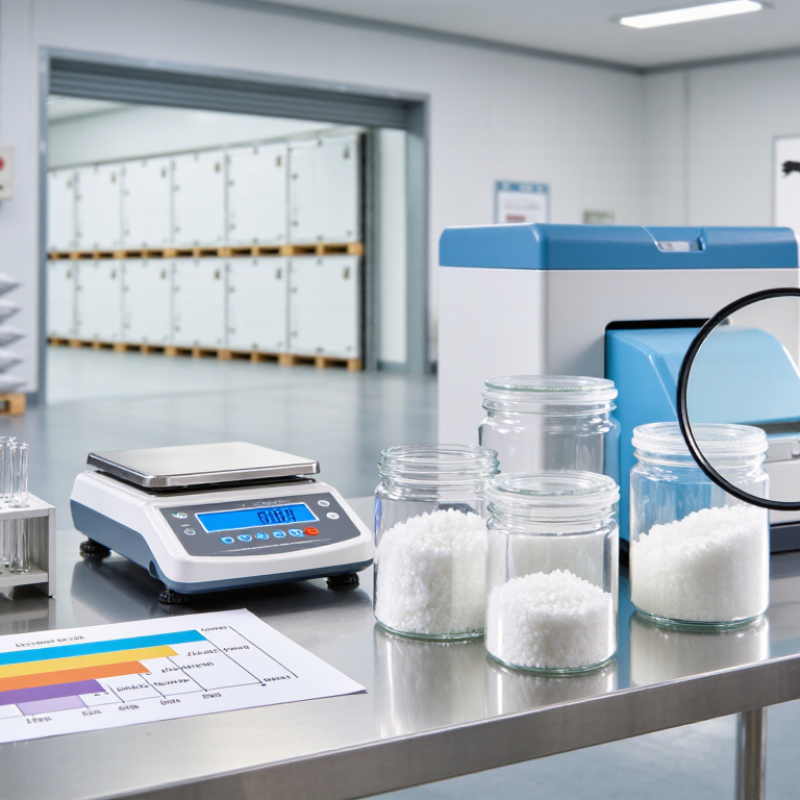
How to Choose Sodium Bisulfate for Global Sourcing?
Sodium bisulfate is commonly supplied as anhydrous or monohydrate material. Anhydrous grades usually contain less bound water. Monohydrate grades can behave differently during storage and mixing. The right choice depends on the process, not only the quoted purity. Industrial grades suit pH adjustment, metal treatment, mineral processing, and some cleaning formulations. Reagent grades require tighter impurity control for laboratory testing. Food-grade material needs documented compliance for the intended application and destination market. Never assume one grade fits every region.
Forms also influence handling. Fine powder dissolves quickly but can create dust during transfer. Granules reduce dust and may flow better through dosing equipment. Crystalline material can offer easier visual inspection. Check assay, moisture, particle size, insoluble matter, iron, chloride, and heavy-metal limits. Packaging matters too. Moisture-resistant bags, lined drums, or flexible intermediate bulk containers may be suitable for different shipment sizes. Poor sealing can cause caking.
Ask for a current certificate of analysis and safety data sheet. Verify batch traceability, production date, shelf-life guidance, and storage conditions. Sodium bisulfate is acidic and may irritate skin, eyes, and respiratory pathways. Local transport and labeling rules should be reviewed before shipment. A small sample trial can reveal unexpected dust, slow dissolution, or clogged feeders. That step is easy to skip. It probably should not be. Supplier audits, independent testing, and clear acceptance criteria make global sourcing more dependable.
| Sourcing Dimension | Typical Specification or Option | What It Means for Buyers | Common Applications |
|---|---|---|---|
| Chemical identity | Sodium bisulfate; sodium hydrogen sulfate; CAS No. 7681-38-1; formula NaHSO4 | Confirm the product is sodium bisulfate rather than sodium sulfate, sulfuric acid, or another acidic sulfate salt. | All industrial, institutional, water-treatment, food, and cleaning uses |
| Chemical form | Anhydrous sodium bisulfate or sodium bisulfate monohydrate | The hydrate state affects molecular weight, assay calculation, moisture behavior, storage, and dosing. | Dry blending, pH adjustment, acidification, and formulated products |
| Physical form | White crystalline powder, fine crystals, granular material, or aqueous solution | Select according to dust control, dissolution rate, metering equipment, transport conditions, and handling requirements. | Granular pool treatment, powder cleaners, industrial processing, and liquid dosing systems |
| Technical grade | Commercial material with supplier-defined assay, moisture, insoluble matter, and trace-metal limits | Usually suitable for industrial use, but buyers should approve a written specification and certificate of analysis before purchase. | Metal treatment, industrial cleaning, mineral processing, pH control, and general manufacturing |
| Pool or water-treatment grade | Dry acidic salt designed for controlled reduction of pH and total alkalinity; particle size may be specified | Review dissolution performance, insoluble residue, packaging, labeling, and local rules for water-treatment chemicals. | Swimming pools, spas, industrial water systems, and pH adjustment |
| Food grade | Sodium bisulfate used as food additive E514 where permitted by the destination market | Requires food-grade documentation, contaminant controls, traceability, and compliance with the importing jurisdiction. | Acidity regulation, leavening systems, processing aids, and selected food formulations |
| Cleaning and detergent grade | Dry acidic ingredient with controlled particle size and low insoluble content | Check compatibility with surfactants, fragrances, packaging materials, and the intended cleaning surface. | Toilet cleaners, descaling products, hard-surface cleaners, and acidic formulations |
| Assay and purity | Common commercial specifications are often around р99% sodium bisulfate on a stated basis, but limits vary by grade and supplier | Do not compare quotations without confirming whether assay is reported on an as-is, dry, or hydrate basis. | Critical for stoichiometric dosing, food production, laboratory work, and formulated products |
| Moisture and caking | Hygroscopic acidic solid; moisture limits and anti-caking performance should be defined | Specify acceptable moisture, flowability, and storage life, especially for humid climates and long ocean transit. | Bulk handling, automatic feeders, dry blends, and warehouse storage |
| Particle-size requirement | Fine powder, standard crystal, or granular distribution defined by sieve analysis | Finer particles dissolve faster but may create more dust; larger granules generally improve handling and metering. | Pool dosing, cleaning powders, chemical blending, and process applications |
| pH behavior | Acidic in water; commonly used to lower pH and neutralize alkaline materials | Dose by measured alkalinity and system volume rather than by a generic dosage assumption. | Water treatment, pool chemistry, industrial neutralization, and acid cleaning |
| Solubility and dissolution | Readily soluble in water; dissolution rate depends on temperature, particle size, agitation, and concentration | Request dissolution or solution-preparation data if the product will be used in automated liquid dosing. | Liquid preparation, pH correction, process baths, and cleaning solutions |
| Packaging options | Moisture-resistant bags, lined sacks, fiber drums, big bags, or bulk shipment; packaging sizes vary by market | Match packaging to container loading, warehouse equipment, humidity exposure, and end-user dosing. | Retail, industrial bulk supply, contract manufacturing, and international distribution |
| Quality documents | Specification sheet, certificate of analysis, safety data sheet, batch traceability, and regulatory declarations | Use the same document checklist for every supplier so quotations can be compared objectively. | All regulated, contractual, and export-oriented applications |
| Transport and storage | Store tightly closed in a cool, dry, well-ventilated area away from incompatible materials and moisture | Confirm the applicable dangerous-goods classification, labeling, and transport requirements for the destination country. | International ocean freight, regional warehousing, and controlled chemical storage |
| Compatibility and safety | Acidic material; avoid uncontrolled contact with strong bases, reactive metals, and incompatible chemicals | Review the current safety data sheet and perform a compatibility assessment before formulation or bulk handling. | Chemical processing, cleaning formulations, water treatment, and manufacturing |
| Best buying approach | Specify chemical form, grade, assay basis, particle size, moisture, insolubles, packaging, documentation, and delivery terms | A complete technical specification reduces quality variation, hidden logistics costs, and customs or regulatory delays. | Global sourcing, multi-country procurement, and long-term supply agreements |
Note: Commercial specifications, regulatory status, transport classification, and permitted applications may differ by country and supplier. Confirm the latest certificate of analysis, safety data sheet, and destination-market requirements before purchase.