Dishwasher Powder vs Tablets Which is Better for You?
When it comes to washing dishes, the choice between Dishwasher Powder and Tablets remains a hot topic. Industry expert Dr. James Sullivan, a respected chemist in cleaning products, states, "Choosing the right dishwashing detergent can significantly impact cleanliness and efficiency." This insight highlights the importance of selecting the best option for your kitchen needs.
Dishwasher Powder offers flexibility in measuring the amount needed based on the load size. It's often more cost-effective than tablets, making it appealing to budget-conscious consumers. However, it can be messy to use, leading to potential spills. For those in a hurry, Tablets provide convenience and ease of use. They come pre-measured, reducing the risk of using too much detergent. Yet, they often come at a higher price point and may not dissolve completely in shorter cycles.
The debate of Dishwasher Powder Vs Tablets continues to be nuanced. Each has its pros and cons, and what works for one person might not for another. Reflecting on your dishwashing needs and habits can be crucial in making the right decision. Both options have their place in kitchens, but the best choice depends on your unique circumstances.
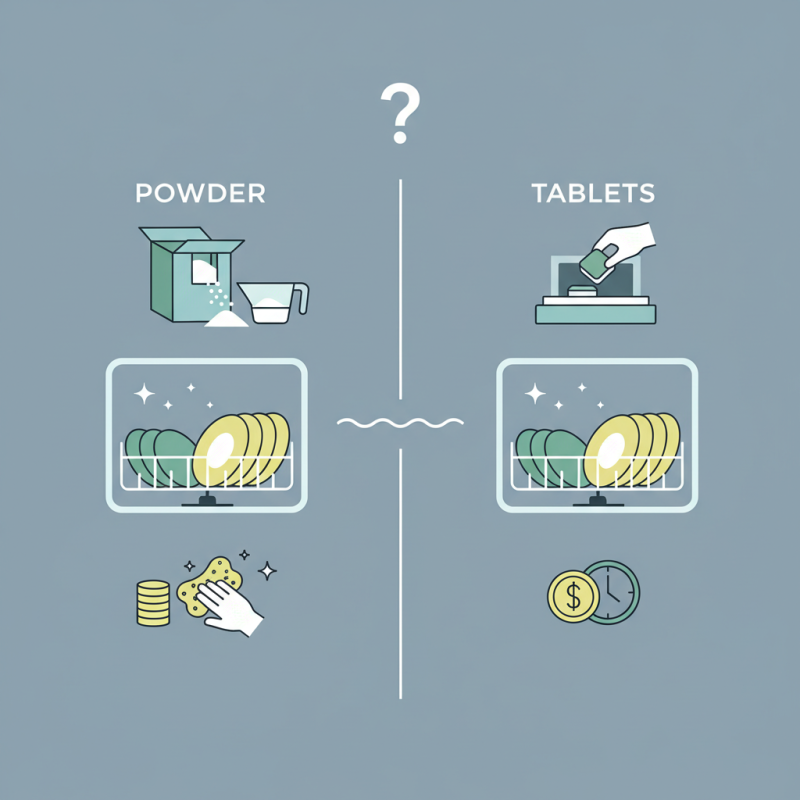
Dishwasher Powder: Advantages and Disadvantages
Dishwasher powder has its own advantages and disadvantages. One of the main benefits of using powder is cost-effectiveness. It tends to be cheaper per load compared to tablets. Research indicates that using powder can save users around 20% on their dishwasher detergent expenses over a year.
However, there's a catch. Measuring powder can lead to inconsistencies in dosing, resulting in either too little detergent or too much. Some users report that overusing powder can leave a gritty residue on dishes. Another downside is storage; powder can be messier and less convenient compared to pre-measured tablets.
When choosing between powder and tablets, consider your needs. If you use your dishwasher often, powder might be more suitable. However, if convenience is a priority, tablets can offer a hassle-free solution.
**Tips:** For optimal cleaning, use the recommended amount of powder. Monitor your dishwasher’s performance, especially if you notice residue. Store powder in a cool, dry place to avoid clumping.
Dishwasher Powder vs Tablets: Which is Better for You?
Dishwasher Tablets: Benefits and Drawbacks
When considering dishwasher tablets, it's important to weigh their benefits and drawbacks. Dishwasher tablets are convenient. They come pre-measured and are easy to store. This eliminates the guesswork in measuring detergent. Many users appreciate this simplicity. However, some tablets may not dissolve completely. This can leave residue on dishes. Such issues require inspection after every wash.
Another consideration is pricing. Tablets can be more expensive than powder options. Users might find better value with bulk purchases of powder detergents. Additionally, while the convenience of tablets is appealing, their effectiveness can vary. Not all tablets are designed for tough, baked-on food. A bit of pre-soaking or scraping might still be necessary.
Tips: Always check the packaging for recommended settings. Some tablets perform better on certain wash cycles. Experiment with different brands to find the best fit for your needs. Regularly clean your dishwasher's filter to ensure optimal performance. Keep in mind that even the best tablets may require occasional troubleshooting to achieve spotless dishes.
Comparative Analysis: Cleaning Efficiency of Powders vs Tablets
When considering dishwasher powder and tablets, cleaning efficiency is a key factor. Studies show powdered detergents tend to dissolve quicker, especially in hard water. According to research by the American Cleaning Institute, these powders can effectively break down grease and food residues. This makes them a strong contender for households dealing with challenging cleaning tasks.
However, tablets have their advantages. They provide pre-measured doses, which can minimize wastage. The convenience of tablets means users can quickly load their dishwashers without fuss. Yet, in tests, some tablets struggled to perform in low temperatures. This inconsistency might lead to unsatisfactory cleaning results.
Tips: When choosing a detergent, analyze your dishwasher's performance with different products. Experimenting with both powders and tablets could reveal which works best for your specific needs. Always ensure proper storage of the product to maintain its effectiveness. Check water hardness levels in your area, as this can greatly impact cleaning results.
Cost-Effectiveness: Is Powder or Tablets More Affordable?
When choosing between dishwasher powder and tablets, cost-effectiveness is a key consideration. Recent data from industry reports suggest that dishwashing powders often provide a lower cost per load compared to tablets. For instance, a typical box of powder may offer 60 loads for around $15, while tablets could cost around $0.25 per use, totaling $20 for just 80 loads. This highlights a notable price difference favoring powders for consumers.
However, price isn’t the only metric to ponder. Dishwashing powders can come with a learning curve. Measuring the correct amount is crucial. Pour too much, and you waste product. Pour too little, and dishes may remain unclean. Reports indicate that around 15% of users find this challenging. In contrast, tablets offer convenience with pre-measured doses, eliminating guesswork. Yet, they could be harder to dissolve in colder water, leading to potential residue on dishes.
Brand loyalty also plays a strong role in user preference. Some consumers swear by the cleaning power of tablets, while others trust powders for their versatility. A study showed that 70% of users prefer one format over the other based on personal experience. Ultimately, the choice might hinge on personal habits, lifestyle, and the local cost of products.
Dishwasher Powder vs Tablets: Cost-Effectiveness Comparison
| Product Type | Cost per Load | Average Units per Package | Total Package Cost | Convenience | Cleaning Effectiveness |
| Dishwasher Powder | $0.15 | 60 | $9.00 | Requires measuring | Highly effective |
| Dishwasher Tablets | $0.20 | 45 | $9.00 | Pre-measured | Very effective |
Environmental Impact: Which Choice is More Eco-Friendly?
When considering dishwasher powders versus tablets, the environmental impact is crucial. Each option has a different footprint. Generally, dishwasher powders often come in larger, bulk formats. This can lead to less plastic waste. However, some powders may contain phosphates, which contribute to water pollution. Tablets, while convenient, may have excessive packaging.
One way to make a more eco-friendly choice involves researching the ingredients. Look for products labeled as non-toxic or biodegradable. Additionally, check for certifications related to sustainability. Sometimes, companies promote green practices but lack transparency.
Tips: Always measure the amount of detergent needed. Overusing detergent harms the environment. Another tip is to run your dishwasher only when it's full. This saves water and energy and reduces your overall impact. Remember, eco-friendly choices can be a bit more challenging, but they are often worthwhile.
