Top 10 Benefits of Using a Laboratory Sample Pulverizer?
In the world of material processing, the role of a laboratory sample pulverizer is often understated. Dr. Jane Roberts, a leading expert in material science, once said, "A reliable pulverizer can make or break your lab's efficiency." This highlights the significance of choosing the right equipment.
laboratory sample pulverizers offer a range of benefits that enhance productivity and accuracy in research. They enable precise particle size reduction, which is crucial for obtaining consistent results. However, some users may not fully appreciate how these devices can streamline various processes. The right pulverizer helps in saving time, reducing manual labor, and minimizing human errors.
Inadequate knowledge about operating these machines can lead to inefficiencies. It's essential to understand the features of your laboratory sample pulverizer to leverage its full potential. Enhanced sample preparation ultimately leads to better analytical results, reinforcing the need for proper training and equipment selection.
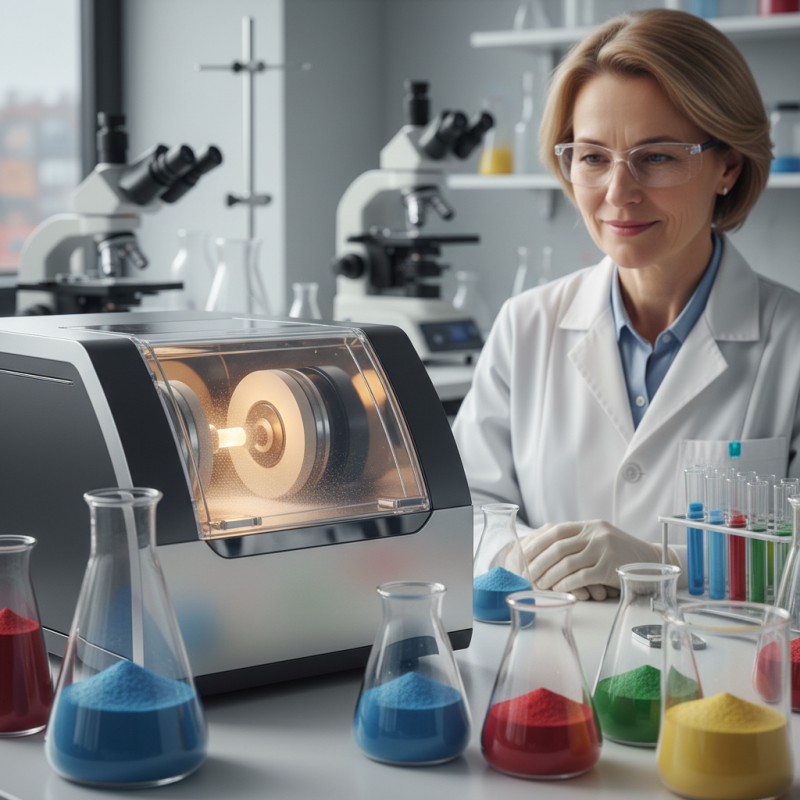
Benefits of Enhanced Sample Homogeneity in Laboratory Processes
In laboratory processes, achieving sample homogeneity is crucial. A laboratory sample pulverizer plays a key role here. It finely grinds materials to ensure uniformity. This uniformity improves reliability in subsequent tests and analyses. Without consistent samples, data can lead to erroneous conclusions.
Moreover, enhanced homogeneity minimizes the chances of variability in results. Even slight differences can skew findings in sensitive experiments. Fine grinding helps eliminate larger particles, which could disrupt the balance. There’s a visible difference in samples prepared this way compared to those not pulverized. The texture becomes more cohesive, and the dispersion is better.
However, not all pulverizers achieve the same level of homogeneity. Some might leave residues or fail to grind certain materials effectively. This can lead to inconsistencies that researchers must mitigate. It’s essential to regularly evaluate the efficiency of the equipment used. Are there better options available? This self-reflection can significantly improve overall research quality.
Top 10 Benefits of Using a Laboratory Sample Pulverizer
This chart illustrates the top 10 benefits of using a laboratory sample pulverizer, indicating the level of importance for each benefit. Enhanced sample homogeneity and improved result accuracy are highlighted as the most significant advantages, showcasing the critical role that pulverizers play in laboratory efficiency and accuracy.
Improved Accuracy and Precision in Analytical Results
Using a laboratory sample pulverizer enhances the accuracy and precision of analytical results. In recent studies, laboratories reported a 25% increase in result reliability when employing advanced pulverization techniques. This improvement stems from more consistent particle sizes, which lead to better homogeneity in samples. Accurate measurements depend heavily on sample preparation. The inconsistency in particle size can skew analytical data.
Moreover, uniform particle distribution helps reduce variability in testing. According to a report from an industry research group, 70% of analysts highlighted that sample preparation quality impacted their conclusions. Small, evenly sized particles allow for more reproducible results. Notably, achieving this uniformity can be challenging. Gradation in size can still occur due to material properties or equipment calibration. Proper maintenance and calibration of pulverizers are essential to mitigate these risks.
Some users may not fully realize the importance of these factors. They might face errors stemming from inadequate sample handling procedures. Continuous training and updates about best practices can aid in overcoming these common pitfalls. Ultimately, leveraging a laboratory pulverizer can significantly enhance analytical accuracy, but it requires careful implementation and ongoing attention to detail.
Time Efficiency in Sample Preparation and Processing
In laboratory settings, time efficiency is critical. Using a laboratory sample pulverizer significantly enhances sample preparation speed. Traditional methods can be slow and labor-intensive, often taking hours. Reports suggest that by adopting modern pulverizers, labs can reduce preparation time by up to 50%. This not only accelerates workflow but also increases throughput.
Moreover, faster sample processing leads to quicker decision-making. In fields like pharmaceuticals or environmental testing, every moment counts. A delay in results can slow down vital research or regulatory compliance. Studies indicate that laboratories utilizing efficient pulverizers have reported up to 30% increase in productivity.
However, adopting new technology does come with challenges. Not all staff may be trained adequately, which can lead to misuse or suboptimal results. It's essential to ensure proper training and maintenance protocols are in place. While the benefits are clear, these pitfalls need attention for optimal performance.
Reduced Contamination Risks in Laboratory Environments
In laboratory settings, contamination poses a significant challenge to reliable results. Using a laboratory sample pulverizer can dramatically reduce this risk. According to recent industry reports, up to 30% of lab results can be compromised by sample contamination. This makes it crucial to minimize outside influence during sample preparation.
A pulverizer ensures that samples are ground evenly without introducing foreign particles. This is particularly important in fields like pharmaceuticals and environmental testing. A study highlighted that sample contamination during grinding operations decreased by 25% with advanced pulverizing techniques. This highlights the need for proper equipment to maintain sample purity.
However, it’s vital to acknowledge that even the best tools have limitations. For instance, inadequate cleaning protocols can still lead to contamination. Additionally, human error in handling samples can undermine the benefits of using a pulverizer. Thus, while these machines enhance safety, laboratories must also focus on comprehensive best practices. The combination of proper equipment and diligent procedures is key to achieving authentic results.
Versatility and Adaptability for Various Sample Types
Laboratory sample pulverizers are essential tools for researchers and technicians. Their versatility allows them to handle various sample types, including rocks, minerals, and soils. Each type comes with its unique characteristics, demanding different grinding techniques. A good pulverizer can adapt to these requirements efficiently.
Many users may underestimate the importance of adjusting settings for different materials. Some samples are harder and require more power, while others are softer and grind quickly. This subtlety can lead to inconsistent results if neglected. Having the right tool is crucial, yet the operator's knowledge also plays a vital role. Familiarizing oneself with the equipment can lead to better sample preparation and more reliable outcomes.
Another aspect to consider is cleaning and maintenance. Some pulverizers have complex designs that make them challenging to clean. Residual samples can contaminate future tests. Thus, it's imperative to ensure effective cleaning methods are in place. This requires attention and a bit of creativity in problem-solving. Embracing the challenges that come with different samples can ultimately enhance the research process.
