What Are the Top Chicken House Cage Types in 2026?
Choosing a Chicken House Cage in 2026 means weighing bird comfort, daily work, building design, and operating costs. The right setup depends on flock size, available space, climate, and the management skills of the people caring for the hens. There is no perfect layout. Small details matter: a drinker that leaks can leave litter damp, while poorly placed nest areas may make egg collection slower.
This guide compares conventional cages, enriched colony systems, and other housing options often considered alongside cage designs. It explains how features such as perches, nesting areas, feed access, ventilation, and manure handling affect routine care. It also highlights practical trade-offs. A more complex system may offer additional resources for hens, but it can require different equipment, training, and maintenance. That deserves careful thought.
The best choice is not determined by a product label alone. Buyers should review the house’s floor plan, inspect materials and moving parts, and ask how repairs and cleaning are handled. They should also check current local requirements and seek advice from qualified poultry professionals, since standards and conditions vary by location. This overview is a starting point, not a substitute for a site-specific assessment. Some questions remain. A system that works well on paper may prove less suitable once birds, workers, and seasonal conditions are part of the picture.
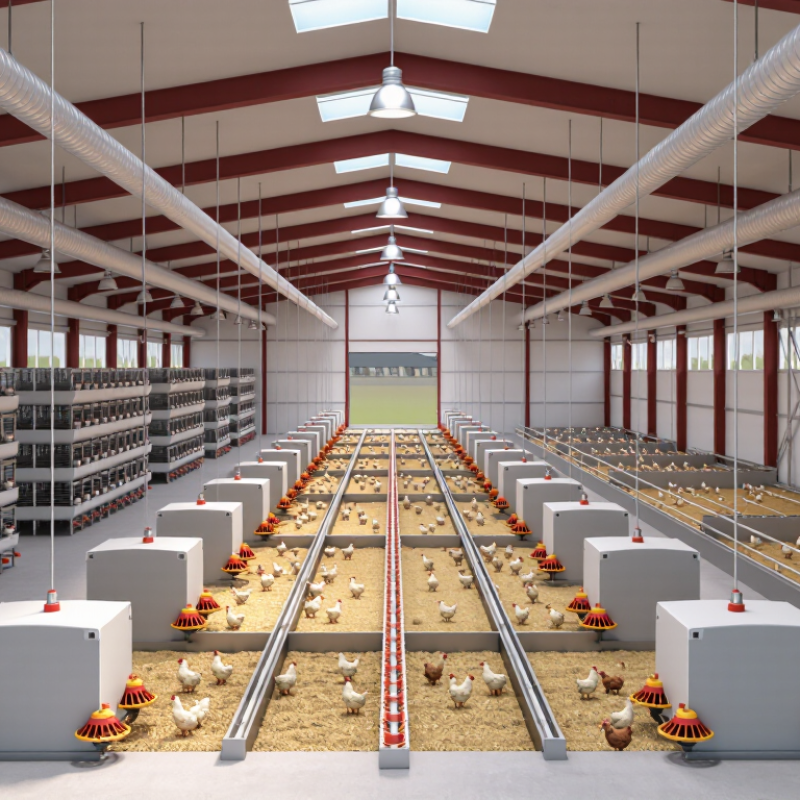
Understanding Chicken House Cages and Their Main Functions
Chicken-house cages are designed to organize birds, feed, water, manure, and egg collection in a compact space. For laying hens, common systems include conventional cages and enriched colony cages. Enriched designs add features such as perches, nesting areas, and scratching surfaces. Broilers, by contrast, are generally raised in floor-based houses rather than cages. The distinction matters: housing should match the birds’ age, purpose, and daily care needs.
Small details count. A drinker placed too high can waste water and leave birds struggling to reach it.
Cage layout also affects cleaning, ventilation, inspection, and how easily workers can spot injured or inactive birds. The European Union’s Council Directive 1999/74/EC sets a benchmark for enriched cages: at least 750 square centimeters per hen, including 600 square centimeters of usable area. This is a regional standard, not a universal design rule.
EFSA’s 2023 scientific opinion on laying-hen welfare identifies restricted movement and limited behavioral opportunities as concerns in cage systems. That trade-off deserves attention.
Efficient equipment can make routines easier, but it cannot replace careful observation; a quiet, tidy house is not always a healthy one.
How Chicken House Cage Types Are Classified
What Are the Top Chicken House Cage Types in 2026?
How Chicken House Cage Types Are Classified
Chicken housing is best classified by how birds are housed and how freely they can move. Conventional cages keep hens in individual compartments, while enriched colonies provide more room and features such as perches or nest areas. Cage-free systems keep birds indoors with shared floor space. Aviaries add multiple levels, ramps, and platforms. These labels describe different layouts, not a simple ranking of quality.
A second useful measure is access: birds may be limited to an indoor enclosure, or able to reach an outdoor run. Housing can also be grouped by flock size, floor design, and the amount of automation used for feeding, watering, and egg collection. A row of drinker lines and a slatted floor look very different from a multi-tier aviary, even when both are indoors. Details matter. Terms can vary between suppliers, so inspect the actual floor plan and bird-access areas rather than relying on a label alone.
Tips: Ask how many birds share each area, where nests and perches sit, and how litter is managed. Check ventilation and access points in person when possible. A tidy diagram helps, but it does not show every daily problem. I may be giving too much weight to layout; careful management matters just as much.
Chicken House Types in 2026: How They Are Classified
A practical way to classify layer housing is by whether hens are kept in cages and how much indoor usable floor area is required. This chart compares EU minimum indoor-space benchmarks.
Enriched cages provide at least 600 cm² of usable area per hen (750 cm² total cage area). Cage-free barn/aviary and free-range systems are subject to a maximum of 9 hens per m² of usable area, equivalent to approximately 1,111 cm² per hen. Free-range systems also require outdoor access. Conventional unenriched cages are not included because they have been prohibited in the EU since 2012. These are legal minimum benchmarks, not recommended stocking targets; requirements vary by jurisdiction.
Source: Council Directive 1999/74/EC.
Top Chicken House Cage Types in 2026
Top Chicken House Cage Types in 2026
In 2026, the main housing choices for laying hens include enriched colony cages, conventional cages in existing facilities, and cage-free aviary systems. Aviaries are not cages, but they are a common alternative in housing comparisons. Each design affects bird movement, egg collection, cleaning, and daily inspection. USDA Agricultural Marketing Service data placed cage-free hens at about 40% of the U.S. table-egg flock in late 2024, showing the scale of this shift. The figure is a U.S. snapshot, not a global forecast.
Tips: Compare usable floor area, access to feed and water, ventilation, and manure handling. Walk the house during a routine inspection. A layout can look efficient on paper and still create crowded corners.
Enriched colony cages add perches, nests, and scratching areas, while keeping birds in defined groups. Conventional cages use space efficiently, but offer fewer opportunities for natural movement. Aviary systems provide multiple levels and more room to move; they also require careful litter management and staff training. No layout is perfect. Choose based on flock size, labor skills, climate, and the quality of the daily checks. The FAO’s poultry housing guidance emphasizes ventilation, hygiene, and reliable access to feed and water as core management needs across housing types.
Comparing Cage Types by Space, Cost, and Management Needs
What Are the Top Chicken House Cage Types in 2026?
Comparing Cage Types by Space, Cost, and Management Needs
Conventional cages use floor space efficiently and make feeding, egg collection, and manure removal easier to automate. Their limited movement, however, can restrict natural behaviors. Enriched cages add perches, nests, and scratching areas, but need more room and careful equipment planning. The EU’s Council Directive 1999/74/EC sets a minimum of 750 cm² per hen in enriched cages, including at least 600 cm² of usable area. Cage-free aviaries provide more vertical and floor space, but often require stronger litter management and more attention to floor eggs. More freedom means more moving parts.
Cost depends on the whole system, not just the cage: building layout, ventilation, labor, and egg handling all matter. EFSA’s 2023 scientific opinion on laying-hen welfare identifies restricted movement and harmful social interactions among welfare concerns. That assessment is a useful reminder that low upfront cost does not capture every management risk. Actual labor and maintenance needs vary with flock size and staff experience.
Tips: Before choosing, sketch the daily workflow: feed, water, egg collection, and manure removal. Compare usable space per hen, equipment upkeep, and the time needed to inspect birds. A small trial can reveal awkward routines. I’d reassess after the first flock; plans often miss one detail.
Choosing a Chicken House Cage for Your Flock
Choosing a chicken house cage starts with your flock’s behavior, not the product label. A small backyard flock may do well in a roomy floor-based house with a secure outdoor run. A raised or divided enclosure can help separate birds, but only if every section stays easy to clean and inspect. The FAO’s Small-Scale Poultry Production manual uses about three to four adult hens per square metre of floor area as a planning guide, and suggests one nest for every four to five hens. These figures describe floor housing, not a safe shortcut for packing birds into cages. Check the usable space, perch access, ventilation, and daily cleaning route before deciding.
Watch the birds. Can a hen reach water without squeezing past a dominant flockmate? Does damp litter collect beneath the drinker? Small details reveal whether the layout works. In a compact house, a simple floor system may be easier to manage than a multi-level design; larger flocks may benefit from divided zones that reduce crowding at feeders. Leave room to remove a bird safely. I would still reassess the setup after a few weeks, since a plan that looks spacious on paper can feel cramped once feeders, nests, and perches are installed. The FAO figures are useful starting points, not a substitute for observing your own flock.
