Global food production is changing quickly, and machinery buyers face more than a simple capacity decision. A modern food machine must support hygiene, traceability, energy control, product consistency, and flexible production. The challenge is practical: a stainless-steel conveyor may run for years, while its control system becomes outdated much sooner.
Recent industry reports show why equipment selection matters. Fortune Business Insights valued the global food processing equipment market at approximately USD 55.3 billion in 2023. Its report projects continued growth through 2032. PMMI’s 2024 industry research also highlights automation, labor shortages, digital monitoring, and sustainable packaging as major investment drivers. FAO reports that food systems generate about one-third of global greenhouse-gas emissions. Energy-efficient machinery is no longer a marketing detail.
“Food security is one of the biggest challenges of our time,” says Johannes Wick, Bühler’s former Chief Technology Officer for Grains and Food. His statement places every machine choice in a wider context. Buyers need equipment that protects quality while using fewer resources.
This guide examines the top food machine types for global buyers in 2026. It covers mixers, ovens, filling machines, processing lines, packaging systems, and inspection equipment. Each category has different cleaning demands, output limits, and maintenance risks. The cheapest quotation may not be the lowest-cost solution.
Some gaps remain.
Supplier claims can be difficult to compare. Regional standards also vary. Buyers should verify test results, service coverage, spare-part access, and total ownership costs before signing contracts.
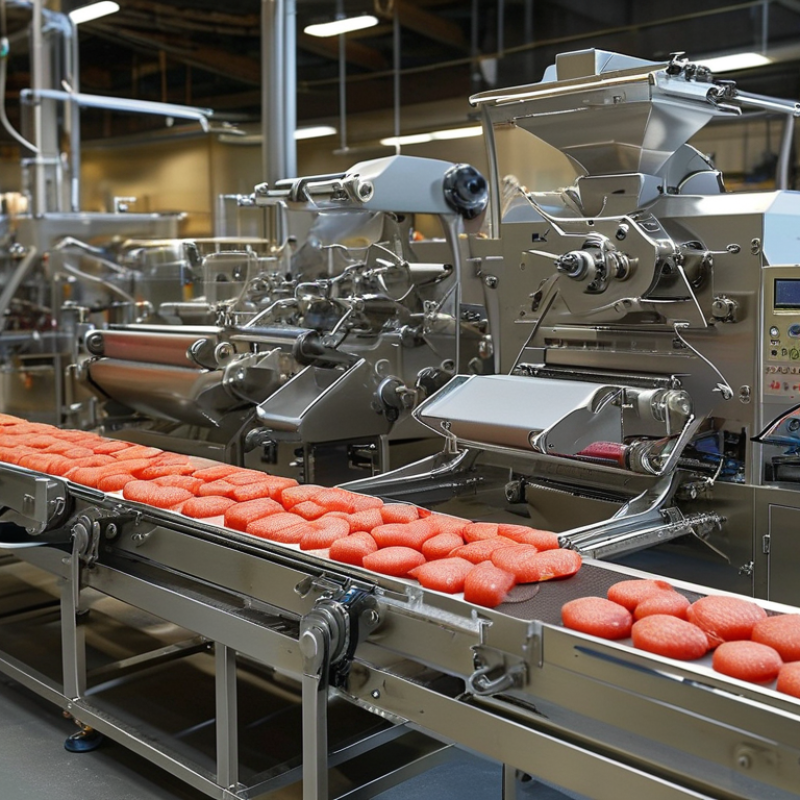
Food machines are engineered systems that prepare, process, package, or preserve edible products. A buyer may encounter mixers, slicers, grinders, ovens, dryers, fillers, sealers, and inspection units. Each machine performs a defined task. Some combine several functions in one production line.
Classification usually begins with the processing stage. Preparation machines handle washing, cutting, weighing, and blending. Thermal machines use controlled heating, baking, cooling, or drying. Packaging machines fill containers, apply seals, print dates, and check package integrity. Cleaning-in-place systems support hygiene between production cycles. The correct category depends on the product’s moisture, texture, temperature, and required output.
Machines can also be grouped by automation level, capacity, drive system, and contact material. Stainless steel surfaces are common where frequent sanitation is necessary. Automated units may improve consistency, but they often require trained operators and stable utilities. Small equipment can suit seasonal production, while continuous systems need reliable raw material flow. No classification is perfect. In factory assessments, one machine often fits several categories, which can confuse purchasing teams. A cutter may also include weighing and dosing functions. Buyers should verify throughput with real ingredients, not only empty-load tests. A thick sauce behaves differently from water. That detail matters. Specifications may look precise, yet maintenance access, noise, cleaning time, and spare-part availability can determine daily performance. Testing remains essential.
2026 Top Food Machine Types for Global Buyers
Main Food Preparation and Processing Machine Types
Food preparation begins with machines that make raw ingredients consistent. Washing and peeling machines remove soil from produce, while slicers, dicers, and shredders create uniform sizes. This improves cooking time and portion control. Mixers handle dough, sauces, fillings, and minced products. For harder ingredients, grinders and emulsifiers produce smoother textures and more stable results.
Processing equipment depends on the product and production volume. Blanchers, steamers, fryers, ovens, and kettles support different cooking methods. Cooling machines reduce product temperature quickly and help protect quality. Filling and sealing machines improve portion accuracy, but only when the product flows correctly. A higher-output machine is not always better. It may create waste when demand changes.
Tips: Test machines with your actual ingredients before purchase. Check contact materials, cleaning access, drainage, temperature control, and emergency stops. Confirm electrical voltage and water requirements for the destination country. Ask for capacity data under real working conditions, not ideal laboratory figures. Spare parts and technical documents also matter. One detail is often missed: operators need clear controls and safe access. A machine can be technically advanced, yet difficult to clean. That weakness deserves honest review.
2026 Top Food Machine Types for Global Buyers
Baking, cooking, and thermal processing machines now compete on control, not only capacity. Convection ovens, deck ovens, mixers, and proofers suit bakeries needing stable texture across batches. Steam cookers, kettles, fryers, and continuous cookers support prepared foods with different moisture targets. Retorts, pasteurizers, blanchers, and plate heat exchangers serve thermal processing lines where time and temperature directly affect safety.
Food loss makes this choice practical. The FAO Food Loss Index report states that 13.2% of food is lost before retail globally. The UNEP Food Waste Index Report 2024 estimates 1.05 billion tonnes were wasted in 2022. Better thermal control may reduce overcooking, rejected batches, and short shelf life. It is not magic. Poor calibration still ruins good equipment.
Tips: Ask for heat-uniformity records, not only energy claims. Check product-contact steel, clean-in-place coverage, spare-part lead times, and local service skills. A retort with weak validation is a liability. Confirm recipe flexibility using your actual dough, sauce, or protein samples. Factory demonstrations can look perfect.
I would also compare energy per finished kilogram. An efficient oven can become wasteful when half-loaded. Buyers should review steam, water, compressed-air, and cooling demand together. The IEA’s Energy Efficiency 2023 analysis reinforces the value of measuring industrial energy intensity, yet many quotations omit this detail. That omission deserves a second look.
Key baking, cooking, and thermal processing machines
The chart compares representative minimum and maximum operating temperatures used in commercial food processing. Baking equipment generally operates at higher temperatures, while retorts, pasteurizers, and chillers support controlled thermal processing and food safety applications. Actual settings vary according to product formulation, equipment design, and local processing requirements.
Global buyers are reviewing food machine types more carefully in 2026. Packaging lines now combine product protection, accurate dosing, and labor efficiency. PMMI’s 2024 Packaging Machinery Shipments and Forecast report places U.S. packaging machinery shipments above 10 billion dollars. The figure signals steady investment across food production.
Form-fill-seal machines suit pouches, sachets, and pillow bags. They create, fill, and close packages in one workflow. For liquid foods, volumetric and piston fillers provide controlled dosing. Auger fillers handle powders, while multihead weighers support snacks and frozen products. Small errors still matter. A one-gram variance can become costly at scale.
Heat sealers, induction sealers, and vacuum sealing machines serve different package structures. Modified-atmosphere packaging can help slow quality loss in chilled foods. Smithers’ Future of Global Packaging to 2028 report forecasts continued growth in flexible packaging demand. However, material compatibility remains a practical challenge. A faster sealer may damage delicate film. Buyers should test temperature, dwell time, seal strength, and cleaning access before purchase. Grand View Research also reports strong growth in food packaging equipment through 2030, supported by automation and convenience foods. Yet automation is not always the best answer. Skilled operators, spare parts, sanitation design, and local technical support can determine real performance.
In 2026, global buyers should evaluate food machines as production systems, not isolated equipment. A polished brochure proves little. Ask suppliers to process your actual ingredients, including sticky, wet, or uneven batches. Record output per hour, product loss, temperature changes, and cleaning time. Short test runs can hide problems.
During factory acceptance testing, check dimensions, guarding, emergency stops, electrical compatibility, and hygienic access. Request material certificates, manuals, maintenance schedules, and performance data under defined conditions.
Food-contact surfaces should be easy to inspect and clean, with few hidden corners. Confirm that local technicians can obtain critical spare parts. A cheap machine may become expensive when one sensor stops production.
I have seen buyers focus on purchase price and overlook labor, water, energy, and changeover costs. That mistake is understandable, but it weakens the comparison.
Compare suppliers using a weighted scorecard. Give practical trials more weight than presentation quality. Review warranty limits, response times, training, remote support, and installation responsibilities. Ask for references from facilities with similar products and climates.
Humidity, voltage stability, and available floor space can change performance. My own evaluations have not always been perfect. Initial assumptions sometimes fail after operators use the machine for several shifts. Leave room for retesting, operator feedback, and a documented correction plan before signing the final contract.