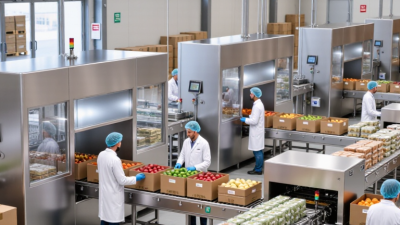
China’s food tech sector reaches far beyond restaurant apps. It includes digital grocery platforms, agricultural technology, automated food production, and new approaches to protein and supply-chain management. For consumers, the changes can be tangible: a meal ordered on a phone, produce tracked from farm to warehouse, or a factory line using sensors to reduce waste.
The market’s scale is clear. The China Internet Network Information Center’s 53rd Statistical Report on China’s Internet Development reported 545 million online food-delivery users at the end of 2023. That figure signals substantial digital demand. It does not, by itself, prove that a company has strong technology, reliable food-safety practices, or a sustainable business model. The distinction matters.
This guide looks at leading Chinese companies through their products, technology, reach, and evidence of real-world execution. Names such as Meituan and Pinduoduo illustrate the consumer-platform side, while agricultural technology and food-manufacturing firms address less visible parts of the system. These categories are not perfectly comparable. That is worth remembering. Company claims, market valuations, and user numbers can tell different stories, and public data is uneven across sectors. Rather than treating “best” as a simple ranking, the article considers what each company actually does, where it operates, and what available evidence supports its position.
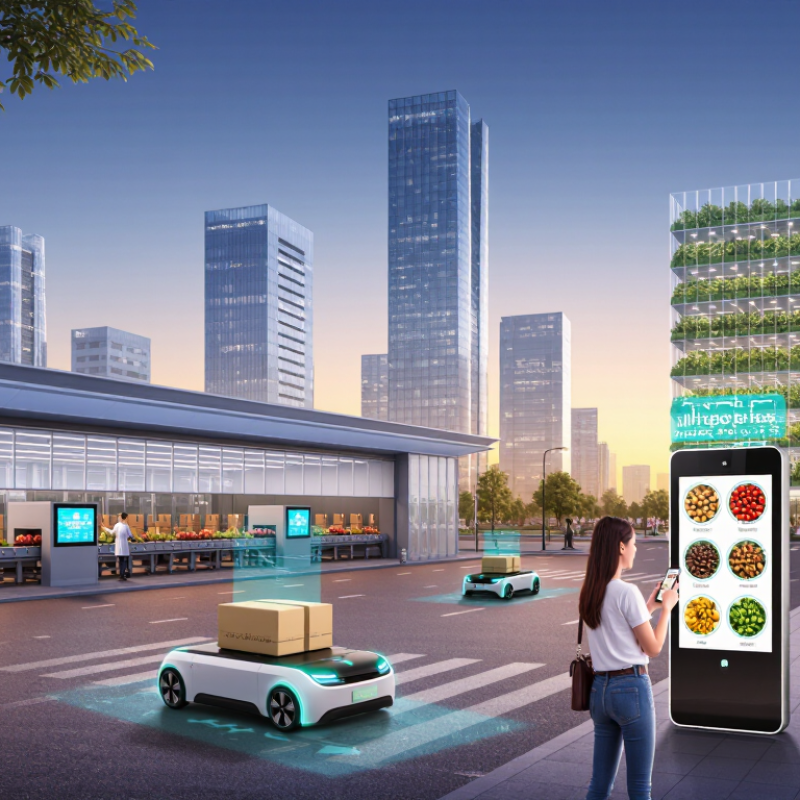
Food technology is not just lab-grown ingredients or automated kitchens. In China, it covers the tools used to grow, process, test, store, and deliver food. A soil sensor can adjust irrigation in a field; a temperature logger can flag a cold-chain break before produce reaches a shop. Digital traceability can also connect a batch of rice with its harvest and storage records. The aim is practical: safer food, less waste, and steadier supply. But technology alone cannot guarantee those outcomes.
The scale is substantial. China’s National Bureau of Statistics reported that grain output reached 706.5 million tonnes in 2024, up 1.6 percent year over year. The China Internet Network Information Center’s 53rd Statistical Report recorded 545 million online food-delivery users by December 2023. These figures show both a vast production base and widespread digital food services, though neither measures food-tech effectiveness directly. That distinction matters. More data does not automatically mean better food. Smaller farms may lack the staff or connectivity to use sophisticated systems, and adoption can be uneven. The figures also leave open a hard question: how much measurable waste or risk does each tool actually reduce?

To assess China’s food technology companies, examine whether technology improves safety, resilience, and access—not just transaction growth. The China Internet Network Information Center reported 545 million online food-delivery users in December 2023, roughly half of China’s internet users. That scale signals demand, but not healthy economics. Compare order density, fulfilment cost per order, refunds, and contribution margin across cities. Definitions matter.
Operational evidence matters just as much. The FAO’s 2019 report estimated that 14% of food was lost globally between harvest and retail, underscoring the potential value of temperature monitoring and inventory forecasting.
Look for disclosed cold-chain coverage, traceability rates, delivery accuracy, and food-safety incident data. Dashboards are not proof. Independent audits and clear measurement methods make claims more credible.
These comparisons remain imperfect: city density, product mix, and reporting practices can skew results. I would treat missing or inconsistent data as a real evaluation risk, not a minor paperwork issue.
China’s food-tech leaders are easiest to understand through the problems they solve. Large digital food-service operators use demand forecasts, dispatch software, and clustered kitchens to move meals through dense cities. The opportunity is substantial: CNNIC’s 54th Statistical Report recorded 553 million online food-delivery users in China by June 2024. Scale matters. Yet rapid delivery can hide uneven quality between kitchens and neighborhoods.
A second profile is the smart-farming company, which combines field sensors, satellite imagery, and crop-management software. Farmers can use soil-moisture readings to decide when to irrigate, rather than relying only on routine. China’s National Bureau of Statistics reported grain output of 695.41 million tonnes in 2023, underscoring the scale of the food system these tools must serve. But a dashboard alone cannot fix poor connectivity or make equipment affordable to every small farm.
Cold-chain and food-traceability companies form another important group. Their software tracks temperature changes from warehouse to shop, while automated sorting systems help handle produce with less manual work. The practical detail matters: one unexplained temperature spike can complicate a shipment’s quality checks. These profiles show real promise, but public data rarely compares company-level results consistently. That gap deserves more scrutiny.
China’s online food-delivery user base grew from 545 million in December 2023 to 553 million in June 2024. These figures describe users across the market, not individual companies. Source: China Internet Network Information Center (CNNIC), 53rd and 54th Statistical Reports on China’s Internet Development.
China’s food-tech sector is shaped less by futuristic gadgets than by tighter control of temperature, time, and waste. In 2023, online retail sales of food in China grew 11.2% year over year, according to the National Bureau of Statistics’ Statistical Communiqué on the 2023 National Economic and Social Development. That shift encourages businesses to combine digital ordering with local warehouses, demand forecasting, and rapid delivery. The core technology is often practical. A temperature sensor inside a chilled truck can flag a rising reading before a delivery reaches a store.
Cold-chain capacity also underpins new business models. The China Federation of Logistics and Purchasing reported that China’s cold-chain logistics market reached 517.5 billion yuan in 2023. Shared refrigerated storage and route planning can help smaller food producers reach urban customers without building entire distribution networks. Some operators earn revenue through storage, delivery, or software services rather than food sales alone. But expensive refrigeration and uneven infrastructure still limit coverage.
Automation is changing kitchens and processing lines, too. Computer vision can check product size or detect packaging defects; data systems can adjust production to changing orders. Subscription boxes and direct-to-consumer sales offer another route, using customer preferences to shape inventory. Yet forecasts can be wrong, and fresh food does not wait. A missed estimate may mean excess stock, not just a weaker dashboard. These models depend on careful handling, reliable data, and honest measurement of waste.
| Sector archetype | Key technologies | Typical business model | Main customers | Relative capital intensity | Key operating challenge |
|---|---|---|---|---|---|
| Online food delivery | Order-matching systems, demand forecasting, digital payments, and algorithmic courier dispatch | Marketplace commissions, delivery fees, and merchant advertising or software services | Consumers, restaurants, and other food-service merchants | Medium to high; platform technology and dense delivery operations require ongoing investment | Balancing delivery speed, courier utilization, food quality, and unit economics |
| Online grocery and instant retail | Digital inventory systems, demand forecasting, order picking, and last-mile route optimization | Retail margin from product sales, sometimes combined with marketplace or fulfillment fees | Households, local retailers, and grocery suppliers | Medium to high; inventory, fulfillment sites, and rapid delivery add operating costs | Managing fresh-food spoilage, inventory accuracy, delivery density, and order profitability |
| Smart agriculture and farm services | Sensors, satellite or drone imagery, farm-management software, and data-driven irrigation or crop monitoring | Equipment sales, software or service subscriptions, project contracts, and agricultural input services | Farm operators, agricultural cooperatives, and food supply-chain businesses | Medium; hardware deployment and field support vary with the service offered | Adapting tools to different crops and farms, while demonstrating reliable productivity or resource-use benefits |
| Food processing automation | Industrial robotics, machine vision, automated weighing and sorting, and production-line control systems | Equipment sales, system integration, maintenance, and factory automation projects | Food manufacturers, processors, and large-scale kitchens | High for equipment-heavy projects; ongoing software and service costs depend on the installation | Handling variable ingredients and products while meeting food-safety and cleaning requirements |
| Alternative proteins and food biotechnology | Plant-protein processing, precision fermentation, microbial fermentation, and food formulation | Packaged-product sales or business-to-business sales of ingredients and processing capabilities | Food manufacturers, food-service businesses, and consumers | Medium to high; research, pilot production, and scale-up can require substantial investment | Achieving appealing taste and texture at competitive cost, with consistent quality and regulatory compliance |
| Cold-chain logistics and monitoring | Refrigerated storage and transport, temperature sensors, traceability systems, and logistics planning software | Storage, transportation, handling, and monitoring fees charged to supply-chain customers | Food producers, distributors, retailers, and food-service operators | High when operating warehouses and refrigerated fleets; lower for software-only services | Maintaining temperature control across handoffs while managing energy, capacity, and delivery costs |
China’s food-tech market is expanding, but growth is uneven. CNNIC reported 545 million online food-delivery users in June 2024. That is substantial. Yet a large user base does not guarantee reliable service, especially where delivery routes are long or demand shifts sharply by hour.
Cold-chain performance remains a costly constraint. The China Federation of Logistics and Purchasing estimated the country’s cold-chain logistics market at 517.1 billion yuan in 2023. More capacity helps, but temperature control must hold from warehouse to doorstep. A single weak handoff can undermine freshness and trust. Smaller operators may also struggle to afford sensors, refrigeration, and trained staff. The figures show scale, not consistent quality.
Emerging investment is moving toward automation, demand forecasting, and traceability. These tools can reduce spoilage and make inventory planning less guesswork-driven. However, algorithms trained on dense urban delivery patterns may work poorly in smaller cities. That deserves more scrutiny. Food-tech companies should measure waste, delivery reliability, and temperature excursions—not just order volume. Growth can look impressive while operational gaps remain.