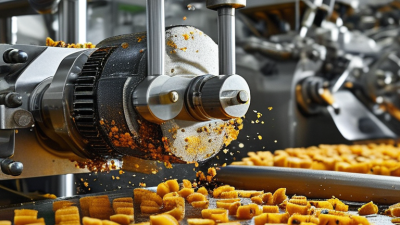
Food processing technology now sits at the centre of food security, efficiency, and consumer trust. Suppliers are no longer judged only by machine speed. Their systems must reduce waste, protect hygiene, and provide reliable production data.
The Food and Agriculture Organization reports that 13.2% of food is lost between harvest and retail. That figure gives processing equipment a practical purpose. Better sorting, chilling, filling, and packaging can protect value before products reach stores. Grand View Research estimates that the global food processing equipment market will continue expanding through 2030, supported by automation, convenience foods, and stricter safety expectations. These figures are useful, but market forecasts are not guarantees.
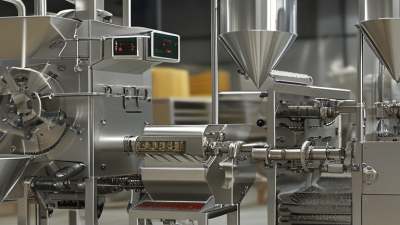
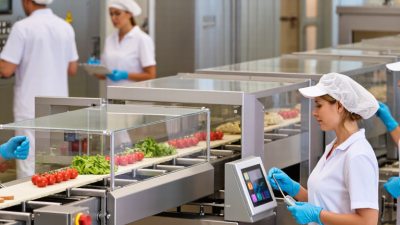
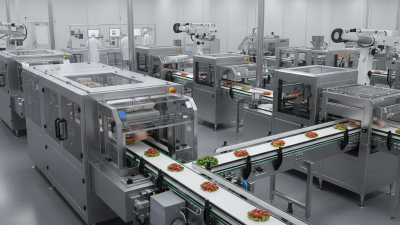
A modern line may include stainless-steel conveyors, optical inspection cameras, robotic handling, and clean-in-place systems. Each component affects maintenance time and product consistency. Professor Chris Elliott, founder of the Institute for Global Food Security, has stated, “Food safety is everybody’s business.” His point remains relevant when comparing worldwide suppliers. Technology cannot replace trained operators, validated procedures, or honest reporting.
This guide examines leading food processing technology suppliers worldwide through engineering capability, regional service, food-safety support, energy performance, and integration quality. It considers equipment for dairy, beverages, meat, bakery, and prepared foods. No ranking is perfect. Supplier strength can change by country, product type, and production scale. A low purchase price may conceal expensive cleaning, spare parts, or downtime. The strongest choice is usually the supplier that proves performance under real factory conditions, not merely in a polished demonstration.
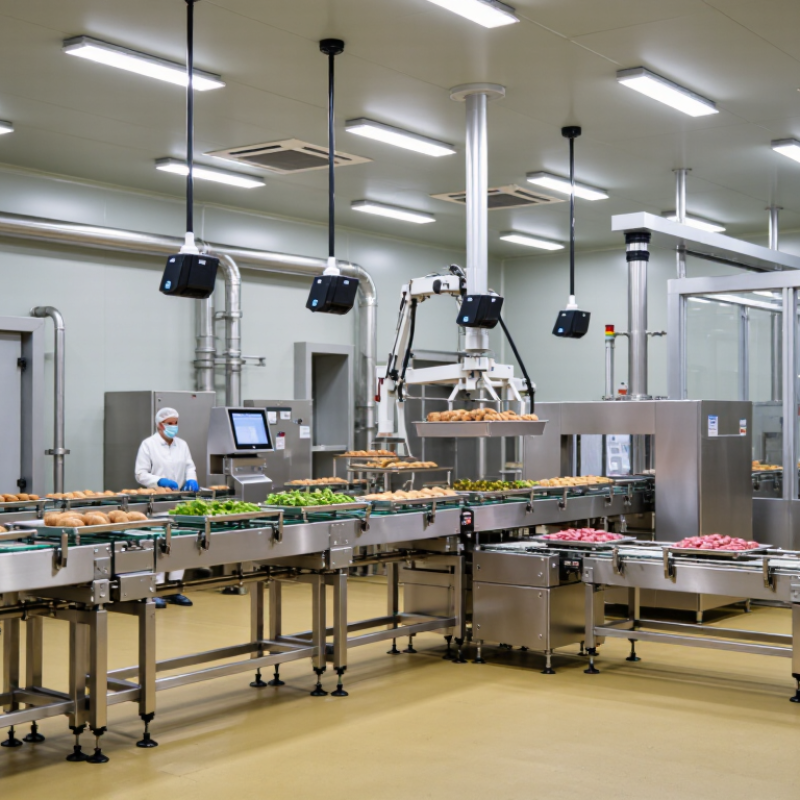
Food processing technology suppliers are companies that provide equipment, systems, and technical services for turning raw ingredients into safe, consistent food products. Their scope includes processing lines, mixing units, heat treatment systems, filling equipment, refrigeration, packaging, and digital monitoring tools. Some suppliers focus on one machine, while others manage complete production lines.
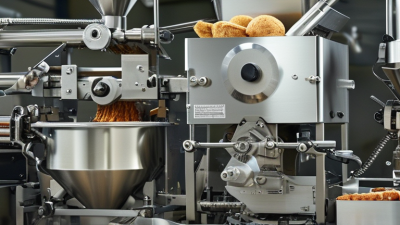
In practice, their work extends beyond equipment sales. Experienced suppliers assess plant layouts, product viscosity, cleaning routines, temperature control, and production capacity. Stainless steel surfaces, sealed joints, and accessible components can simplify daily sanitation. Reliable suppliers also provide installation guidance, operator training, maintenance schedules, spare parts, and performance documentation. Technical drawings and validation records matter.
The definition is broad, but it should not become vague. A supplier offering software alone may not support mechanical integration or hygiene planning. A machine with impressive output can still waste ingredients or create difficult cleaning points. Site conditions often change the best solution. Humidity, water quality, workforce skills, and local requirements all influence equipment selection. No supplier fits every plant. That deserves attention.
Professional evaluation should compare verified performance data, safety procedures, service response times, and total operating costs. Operators should test controls during realistic production trials, not only watch a polished demonstration. Claims also need evidence from inspection records, reference installations, and measurable results. Even careful assessments can miss future maintenance problems, so contracts should define responsibilities clearly.
| Technology Supplier Scope | Core Processing Function | Typical Food Applications | Common Operating Parameters | Primary Equipment Supplied | Relevant Compliance Scope |
|---|---|---|---|---|---|
| Thermal Processing | Pasteurization, sterilization, cooking, blanching and heat stabilization | Milk, beverages, sauces, canned foods, vegetables and ready meals | Pasteurization commonly uses temperatures below 100°C; commercial sterilization generally uses temperatures above 100°C in pressure-controlled systems | Plate heat exchangers, tubular heat exchangers, retorts, kettles, blanchers and cooking lines | Validated time-temperature control, hygienic design, HACCP-based process control and applicable local food-safety regulations |
| Refrigeration and Freezing | Rapid cooling, chilled storage, blast freezing and preservation of product quality | Meat, seafood, frozen vegetables, bakery products, dairy and prepared meals | Chilled food is generally maintained at or below 5°C; frozen food is commonly stored at or below −18°C | Blast freezers, spiral freezers, tunnel freezers, chillers, cold rooms and refrigeration systems | Cold-chain monitoring, temperature mapping, hygienic airflow management and energy-efficiency requirements |
| Drying and Dehydration | Moisture reduction to improve shelf life, handling and concentration | Fruit, vegetables, herbs, grains, dairy powders, coffee, ingredients and snack foods | Product temperature and final moisture depend on the food matrix; spray drying commonly produces powders with low residual moisture | Spray dryers, tray dryers, belt dryers, fluid-bed dryers, vacuum dryers and freeze dryers | Moisture and water-activity verification, dust control, allergen management and validated drying profiles |
| Size Reduction and Milling | Cutting, crushing, grinding, milling and particle-size classification | Flour, cereals, spices, coffee, sugar, nuts, meat and plant-based ingredients | Particle-size targets vary by product, from coarse cuts to fine powders; process temperature must be controlled for heat-sensitive materials | Roller mills, hammer mills, pin mills, slicers, dicers, cutters and sieving systems | Foreign-material control, dust-explosion risk assessment, cleanability and product-size verification |
| Mixing, Blending and Emulsification | Uniform distribution of ingredients and formation of stable liquid or semi-solid products | Sauces, dressings, beverages, dairy products, bakery doughs, processed meat and confectionery | Mixing time, shear rate, viscosity and batch temperature are selected according to formulation and texture requirements | Ribbon blenders, paddle mixers, high-shear mixers, homogenizers, kneaders and vacuum mixers | Recipe control, allergen segregation, hygienic welding, clean-in-place compatibility and batch traceability |
| Fermentation and Bioprocessing | Controlled microbial or enzymatic conversion for flavor, preservation, acidity or texture | Yogurt, cheese, fermented vegetables, vinegar, yeast products, soy foods and beverages | Temperature, pH, oxygen availability and residence time are controlled according to the selected culture or process | Fermentation tanks, incubation rooms, culture dosing systems, separators and process-control units | Culture management, pH monitoring, contamination prevention, sanitary utilities and batch documentation |
| Separation and Clarification | Removal or concentration of solids, liquids, fats, proteins and suspended particles | Dairy, fruit juice, edible oils, starch, plant proteins, brewing and wastewater streams | Separation performance depends on density, particle size, viscosity, membrane selectivity and feed composition | Centrifuges, filters, membrane systems, decanters, separators and clarifiers | Food-contact material suitability, membrane integrity, hygienic drainage and controlled product recovery |
| Non-Thermal Preservation | Microbial reduction or shelf-life extension with limited heat exposure | Juices, smoothies, ready-to-eat foods, seafood, meat products and functional beverages | High-pressure processing commonly operates at several hundred megapascals; pulsed electric-field treatment uses controlled electrical pulses | High-pressure systems, pulsed-electric-field units, ultraviolet treatment systems and cold-plasma equipment | Process validation, challenge studies, packaging compatibility and regulatory approval for the intended food category |
| Filling, Packaging and End-of-Line Automation | Accurate filling, sealing, coding, inspection, case packing and palletizing | Beverages, dairy, snacks, frozen foods, canned foods, bakery products and prepared meals | Line speed, fill accuracy, package atmosphere, seal integrity and product temperature are monitored during production | Fillers, form-fill-seal machines, vacuum packers, modified-atmosphere packers, checkweighers and metal detectors | Packaging-material compliance, seal testing, traceability, foreign-body detection and hygienic zoning |
| Automation, Inspection and Digital Process Control | Real-time monitoring, quality inspection, production control, data capture and predictive maintenance | Applicable across beverage, dairy, bakery, meat, seafood, snacks and ingredient production | Common monitored variables include temperature, pressure, flow, pH, conductivity, weight, moisture and line efficiency | PLC and SCADA systems, vision inspection, sensors, robotics, weighing systems and manufacturing-execution interfaces | Electronic records, calibration, cybersecurity, audit trails, data integrity and integration with food-safety management systems |