Why Attend a Food Processing Expo?

Food manufacturers are being asked to produce more consistently while reducing losses, energy use, and downtime. The scale of the challenge is clear. FAO’s The State of Food and Agriculture 2019 estimated that 14 percent of food is lost between post-harvest and retail, excluding retail losses. UNEP’s Food Waste Index Report 2024 estimated that 1.05 billion tonnes of food were wasted in 2022 across households, food service, and retail. These figures do not mean one exhibition can solve the problem. They do show why practical improvements in processing, handling, and packaging matter.

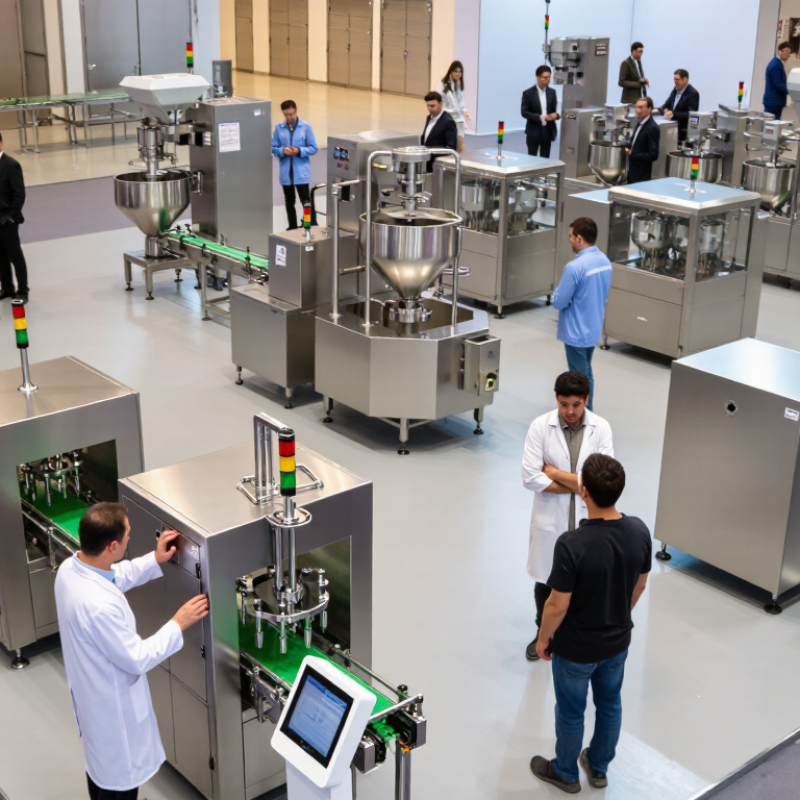
A food processing expo gives manufacturers a place to examine those improvements in person. Visitors can compare filling lines, inspect sensors, watch cleaning systems operate, and ask suppliers how equipment performs under real production conditions. That direct comparison can be more useful than a polished brochure. It also helps teams discuss automation, food safety, traceability, and resource efficiency with engineers and industry peers. Still, not every booth delivers useful evidence. A confident demonstration is not the same as verified performance. Ask about operating costs, maintenance needs, and results from comparable facilities. The best reason to attend is not simply to see new machinery; it is to leave with better questions, credible contacts, and ideas your plant can test.
Why Attend a Food Processing Expo?

What a Food Processing Expo Offers Industry Professionals

Why Attend a Food Processing Expo?

What a Food Processing Expo Offers Industry Professionals

A food processing expo lets professionals examine equipment in motion, not just in brochures. At a pilot line, they can watch product move through a cutter, conveyor, or filling station. They can ask about changeover time, cleaning access, and output under real operating conditions. Small details matter. A guard that slows routine cleaning may affect an entire shift.

The FAO reported that 13.2% of food was lost between harvest and retail in 2021. That figure gives process efficiency a practical context: better handling and reliable equipment can help reduce avoidable losses. Exhibitors’ demonstrations can prompt useful questions, but a polished display is not a plant trial. Ask how test results were measured, and whether the setup matches your product and line speed.

Workforce planning belongs in the conversation, too. A 2024 Deloitte and Manufacturing Institute report estimated that 1.9 million U.S. manufacturing jobs could remain unfilled by 2033 if workforce challenges persist. Look for training ideas alongside automation. Some claims still need checking against your own shift data.

How Live Demonstrations Reveal New Processing Technologies

Why Attend a Food Processing Expo?

Live demonstrations show what specification sheets often leave out: how equipment behaves with actual product. Watch a slicer handle uneven vegetables, or see a washdown take place between production runs. Notice product loss, changeover time, noise, and how easily staff can reach contact surfaces. Small details matter. A machine may look efficient on a clean show floor, but your ingredients, operators, and shift pace may tell a different story.

The FAO’s 2023 report, Tracking progress on food and agriculture-related SDG indicators, estimates that 13.2% of food was lost between harvest and retail in 2021. This figure covers the wider supply chain, not processing alone, so it should not be treated as a measure of factory waste. Still, it highlights why yield and handling deserve careful attention. At a live demo, ask how throughput, rejects, water use, and product quality are measured. A polished run is useful, but it is not a plant trial.

Tips: Bring a sample product specification and a short list of operating constraints. Ask to see a changeover, not just the steady run. Record the results; memory is unreliable in a noisy hall.

Why Attend a Food Processing Expo? — How Live Demonstrations Reveal New Processing Technologies

Live demonstrations let visitors observe equipment operating with real products, ask technical questions, and assess whether a process may suit their production needs.

Technology What a Live Demonstration Can Show Useful Details to Observe or Ask About Why It Matters to Attendees
Optical sorting Cameras or other sensors inspect products as they move along a line; sorting mechanisms, such as air jets, can remove selected items. Ask which defects or product characteristics the system can detect, how settings are adjusted, and how performance changes with product variation. Seeing the product run through the sorter helps visitors judge detection limits, product handling, and whether a sample trial is needed.
Inline near-infrared (NIR) measurement A sensor measures reflected near-infrared light and can estimate selected product properties when calibrated for the material and application. Ask which properties are measured, how calibration is maintained, and how readings are checked against a laboratory reference method. A demonstration clarifies whether measurements can be made during production and what validation is required before using readings for process control.
Robotic picking and handling A robot uses a programmed motion and, in many systems, vision or gripping tools to pick, place, or orient products. Observe product changeovers, grip reliability, handling of irregular shapes, guarding, and how the system responds to missed picks. Real product trials reveal handling constraints that are difficult to assess from specifications alone, especially for delicate or variable items.
High-pressure processing (HPP) Packaged products are treated in a pressure vessel using water as the pressure-transmitting medium. Commercial HPP processes commonly use pressures in the 400–600 MPa range. Ask about batch loading, package compatibility, process validation, cycle planning, and how pressure treatment affects the specific product. Seeing the vessel and workflow helps visitors understand that HPP is typically a batch process and assess its fit with packaging and production planning.
Membrane filtration Liquid passes across a membrane that separates components according to the membrane and process configuration. Ask what is retained or passes through, how fouling is monitored, and how cleaning and membrane replacement are managed. A running demonstration makes flow paths and separation stages easier to understand, while highlighting cleaning and maintenance considerations.
Clean-in-place (CIP) systems A programmed cleaning sequence circulates cleaning solutions through equipment and pipework without taking the system apart for routine cleaning. Observe the sequence and instrumentation; ask how time, temperature, flow, and chemical concentration are monitored and recorded. Visitors can assess how cleaning is controlled and documented, and identify questions about hygienic design and verification for their own process.
Heat exchangers Product is heated or cooled as it flows through a heat-transfer system; the demonstration may show the product path and temperature controls. Ask about product viscosity, temperature monitoring, flow rate, cleaning requirements, and how the design handles the intended product. Live operation helps attendees connect heat-transfer principles with product quality, process control, and equipment-cleaning requirements.

Expo tip: Bring representative product samples and ask suppliers to explain test conditions, measurement methods, and limitations. Demonstration results can vary with the product, settings, and operating conditions.

How Visitors Evaluate Equipment, Ingredients, and Services

At a food processing expo, visitors rarely judge a machine by its polished casing alone. They watch it run, listen for uneven vibration, and check whether controls are clear from an operator’s position. A steady conveyor looks reassuring, but the real question is how it handles a change in product size or speed. Look closely. Ask how long a changeover takes and which parts need frequent cleaning. A brief demonstration may not show stoppages, awkward access, or cleanup time. Not every demo helps.

Ingredient displays invite a different kind of evaluation. Visitors can compare texture, aroma, and consistency, then ask how samples behave under heat, mixing, or storage. Request practical details, such as batch variation and handling requirements, rather than relying on a promising sample. Services matter too. Ask who provides installation guidance, staff training, and routine technical support, and how quickly help is usually available. I have sometimes left a booth with attractive brochures but no clear answer about response times. That is worth noting, even if the conversation felt friendly. A notebook with operating questions, sample observations, and follow-up points makes comparisons easier after the noise and bright displays fade.

What Educational Sessions Teach About Industry Challenges

Why Attend a Food Processing Expo?

What Educational Sessions Teach About Industry Challenges

Educational sessions at a food processing expo can turn broad industry concerns into practical questions. A talk on sanitation, for example, may examine how cleaning schedules affect production time, water use, and equipment access. Details matter. A useful speaker explains not only the recommended procedure, but also where teams commonly struggle to apply it.

Sessions on automation often address a less glamorous challenge: integrating new equipment with older production lines. Attendees can learn what information to gather before evaluating a system, such as product changeover time, staffing needs, and maintenance capacity. That is useful. A technical presentation should make assumptions clear, since a solution that works in one facility may not suit another.

Food safety and supply chain discussions can also help teams prepare for disruptions. Speakers may describe ways to assess ingredient variability, document process controls, or respond when deliveries arrive late. These examples give managers specific points to discuss with operators and quality staff. Not every answer fits. I would still want to compare session advice with a facility’s own data, because conference examples can leave out inconvenient details, like limited floor space or uneven staff training. Attendees who ask focused questions may leave with better ways to investigate those gaps.

Why Attend a Food Processing Expo?

What Educational Sessions Teach About Industry Challenges

Why it matters: Food safety sessions can help processors strengthen sanitation, process controls, and traceability. The CDC estimates that foodborne illnesses cause about 48 million illnesses, 128,000 hospitalizations, and 3,000 deaths in the United States each year.

Source: U.S. Centers for Disease Control and Prevention (CDC). The horizontal axis uses a logarithmic scale so all three values are visible.

How Networking Creates Opportunities for Business Growth

Why Attend a Food Processing Expo?
How Networking Creates Opportunities for Business Growth

Business growth often starts with a practical problem, not a sales pitch. At a food processing expo, a plant manager might compare conveyor options while watching a live demonstration. A packaging specialist may share a quick fix for seal failures. These conversations can reveal useful suppliers, technical partners, and new customer needs. The details matter: ask about cleaning time, changeovers, service support, and throughput—not just equipment price.

In its 2024 B2B Pulse, McKinsey reported that 41% of surveyed B2B buyers preferred in-person sales interactions. That preference helps explain why face-to-face meetings still matter for complex purchasing decisions. A short discussion can clarify requirements that emails miss. Exchange contact details, note the specific challenge, and agree on one realistic next step. Not every handshake becomes revenue.

Networking can also surface ideas for reducing waste. The Food and Agriculture Organization estimates that 13.2% of food was lost between harvest and retail in 2021. At an expo, processors can compare approaches to handling, packaging, and storage with people facing similar constraints. Still, a crowded booth can waste an afternoon, and a promising conversation may lead nowhere. Follow-up takes discipline; I would not assume one meeting proves a solution will work. Ask for data, test claims, and keep the conversation open.