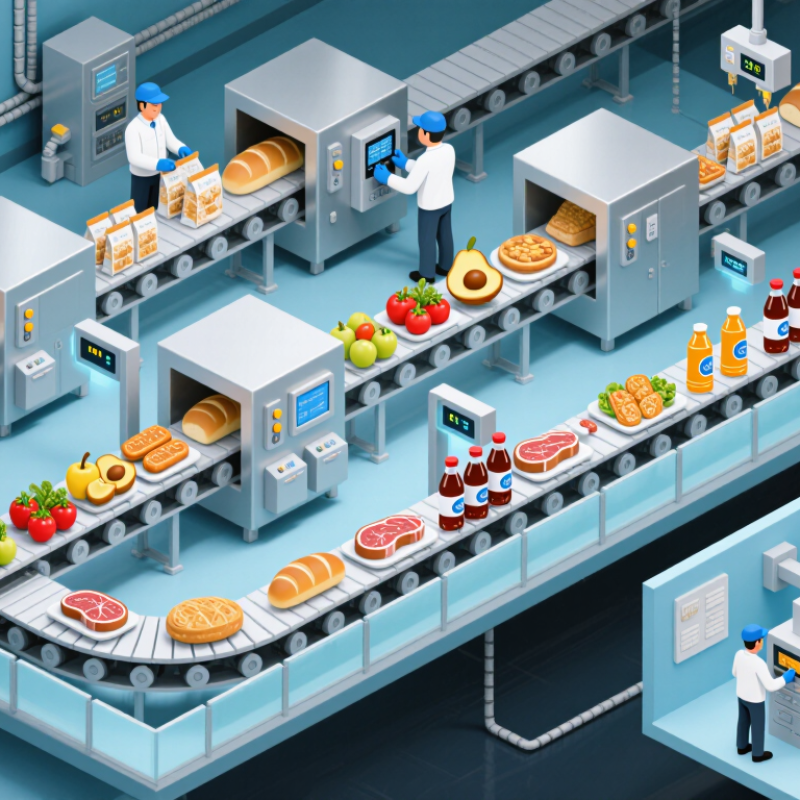
In 2026, food processing technology is moving beyond faster production. Global buyers now seek safer, cleaner, and more adaptable systems for changing markets. A modern processing line may include smart sensors, hygienic conveyors, automated filling, and real-time quality monitoring. These features can reduce waste, but only when operators understand how to use them.
This guide examines practical technologies for meat, dairy, bakery, beverage, fruit, and vegetable processing. It considers throughput, product consistency, sanitation design, energy use, maintenance, and total ownership costs. Details matter. A stainless-steel surface should support effective cleaning, while control panels should remain clear during a busy production shift. Reliable suppliers should provide documented specifications, installation guidance, operator training, spare parts, and responsive technical service.
Real conditions differ. A machine that performs well in a European test facility may struggle with unstable power, limited water pressure, or dusty environments elsewhere. Buyers should therefore request factory trials, independent certifications, reference projects, and clear performance data before making decisions. Supplier claims need verification. Promised capacity may depend on product size, moisture, packaging material, and worker skill.
The strongest investment is not always the most automated one. A simpler line may deliver better results when local maintenance resources are limited. This article compares emerging solutions with established equipment, while recognizing that no technology fits every processor. Careful evaluation can help buyers improve food safety, production efficiency, and long-term resilience without sacrificing practical reliability.
Food processing technology is the coordinated use of equipment, controls, and scientific methods to convert raw ingredients into safe, stable, and usable foods. Its scope covers sorting, washing, cutting, milling, mixing, heating, cooling, drying, fermentation, packaging, and quality inspection. It also includes sensors, traceability systems, water treatment, and energy management.
The core functions are practical. Heat treatment reduces harmful microorganisms. Rapid cooling protects texture and limits bacterial growth. Moisture control extends shelf life. Accurate dosing keeps recipes consistent, while metal detection and seal inspection support product safety. FAO’s State of Food and Agriculture 2022 reports that 13.2% of food is lost after harvest and before retail. Better processing can reduce this loss, especially where cold storage and preservation are weak. Small improvements matter.
Technology does not solve every problem. Poor calibration can waste ingredients, water, and energy. Excessive processing may also reduce quality or create unwanted texture. UNEP’s Food Waste Index Report 2024 estimates that 1.05 billion tonnes of food were wasted in 2022 across retail, food service, and households. This figure shows why processing decisions must consider the entire chain, not only factory output. A practical evaluation should measure yield, downtime, cleaning time, worker safety, and resource use. Data from sensors helps, but operators still need experience. Machines can report stable temperatures while a worn seal quietly fails. That is an uncomfortable gap.
Food Processing Technology: Definition, Scope, and Core Functions
Food processing technology applies controlled thermal, cooling, drying, and preservation methods to improve food safety, shelf life, quality, and logistics performance. The chart shows representative operating-temperature benchmarks commonly used across major processing functions. Actual settings depend on product composition, equipment design, residence time, packaging, and applicable regulations.
Reference basis: commonly used industry benchmarks, including HTST milk pasteurization at 72°C for 15 seconds, frozen-food storage at −18°C, and commercial retort processing near 121°C. Values are indicative rather than universal specifications.
Food processors are adopting connected systems that improve safety, consistency, and production visibility. AI-powered vision cameras can detect color changes, damaged surfaces, and irregular portions on fast-moving lines. These systems support inspectors, but they should not replace trained human judgment. False alerts still occur under steam, glare, or changing product textures.
Digital sensors now track temperature, pressure, humidity, and cleaning conditions in real time. A dashboard can show a cooling tank rising from 4°C to 7°C before quality problems spread. Digital twins also help engineers test equipment settings without stopping production. Their value depends on accurate data, and many factories still collect incomplete records.
Gentle preservation technologies are gaining attention. High-pressure processing, pulsed electric fields, and controlled-atmosphere packaging can extend shelf life while reducing heat exposure. Their results vary by product, formulation, packaging, and local validation requirements. Energy-efficient motors, heat recovery units, and water-reuse systems are also becoming practical purchasing criteria. Savings may look impressive on paper, yet maintenance costs can change the final result.
Robotic handling improves hygiene in repetitive tasks, including filling, palletizing, and sealed-product transfer. However, automation requires skilled technicians and clear emergency procedures. Cybersecurity deserves equal attention because connected equipment can affect production continuity. Buyers should request sanitation records, performance testing, spare-parts plans, and operator training before approving a system. Cheap integration can become expensive later.
In 2026, food processors are moving beyond isolated machines. They are building connected production systems. Automation can control filling, sealing, weighing, and cleaning with consistent timing. Robotics can move trays, cartons, and ingredients while reducing repetitive manual handling. Smart sensors monitor temperature, pressure, moisture, and line speed. These details help operators detect problems before a full batch is affected.
A reliable system also needs clear data. Manufacturing software can connect equipment, maintenance records, quality checks, and inventory movements. Buyers should request traceability from raw material intake to final shipment. In practical factory trials, small delays often create larger losses than expected. A robot may work accurately, yet poor conveyor design can still cause stoppages. Automation is not magic. It needs skilled people, suitable layouts, and regular validation. Cybersecurity and access control also deserve attention, especially when machines share production data.
Tips: Start with one measurable bottleneck. Test the system during real production conditions. Check cleaning access, emergency controls, spare parts, and operator training. Ask for documented performance data, not only impressive demonstrations. Leave room for manual intervention. Some plants discover that a fully automated step is less flexible during seasonal product changes. Review energy use and maintenance time after installation. Keep it measurable.
2026 Best Food Processing Technology for Global Buyers
Sustainable processing now means measuring every kilogram, kilowatt-hour, and liter of water. Global buyers are choosing equipment that reduces waste without weakening food safety or product quality. In practical factory audits, heat recovery has shown clear value. Exhaust heat can warm wash water or support drying stages. Variable-speed motors also reduce electricity use during slow production periods.
Smart sensors make these savings easier to verify. They can track temperature, moisture, pressure, and energy consumption in real time. A processor may detect an inefficient cooling cycle before it becomes an expensive habit.
Digital records also support supplier audits and local regulatory checks. However, automation is not a magic answer. Sensors need calibration, trained operators, and dependable maintenance.
Waste reduction begins with better process control.
Accurate cutting can increase usable yield from vegetables, meat, and baked products. Side streams may become animal feed, compost materials, or approved secondary ingredients, depending on local rules. Water filtration can allow limited reuse in non-contact cleaning stages.
The risks remain real. Poorly managed reuse can spread contamination, while over-engineered systems may consume more resources than they save. Buyers should request verified energy data, lifecycle information, sanitation records, and realistic service plans. A smaller, repairable machine may sometimes outperform a highly complex system over ten years. That is easy to overlook.
Selecting processing equipment for global markets requires more than comparing purchase prices. Buyers should examine hygiene design, throughput, energy use, maintenance access, and operator safety. The FAO reported that 13.2% of food is lost between harvest and retail globally. Equipment that reduces spillage, temperature variation, and product damage can therefore support both efficiency and food security.
Capacity claims need practical verification. Ask suppliers to test your actual ingredients, including viscosity changes, particle size, and seasonal moisture. Check cleaning time, water consumption, spare-part availability, and remote diagnostics. The International Energy Agency identifies energy efficiency as a major route to lower industrial emissions. However, efficiency figures can be misleading without defined operating conditions. Request test records, not attractive estimates. A low purchase price may become expensive after repeated stoppages. That risk is easy to underestimate.
Tips: Build a weighted evaluation sheet before negotiations. Give hygiene, validated output, lifecycle cost, and local technical support clear scores. Review at least three years of maintenance data where available. The PMMI 2024 industry outlook highlights continuing automation and labor challenges in processing operations. Still, automation should match workforce skills and product complexity. More sensors are not always better. I would challenge any specification that ignores training, cleaning behavior, or future product changes. No checklist is perfect.
Comparative guide for selecting food-processing equipment by product requirements, process control, operating conditions, food safety, logistics, and total cost of ownership. Figures are typical industry ranges and must be confirmed through product-specific trials and local regulatory review.
| Processing Technology | Best-Fit Products | Typical Operating Conditions | Primary Preservation Mechanism | Typical Shelf-Life Outcome | Throughput Profile | Product Quality Impact | Packaging and Logistics | Key Buyer Selection Criteria | Main Limitations |
|---|---|---|---|---|---|---|---|---|---|
| High-Temperature Short-Time Pasteurization | Liquid milk, plant-based beverages, juices, liquid egg, sauces and other refrigerated liquids | Common example: milk at approximately 72°C for 15 seconds. Exact time-temperature schedules vary by product, viscosity and regulations. | Reduces vegetative pathogens and spoilage microorganisms; does not normally destroy bacterial spores. | Generally refrigerated shelf life from several days to several weeks, depending on product, packaging and hygiene controls. | Continuous operation with high throughput; well suited to automated filling lines. | Usually preserves fresh flavor and nutritional quality better than severe heat treatment. | Requires hygienic packaging and an uninterrupted cold chain, commonly at or below 4°C for chilled products. | Heat recovery CIP/SIP capability Accurate flow diversion Cold-chain reliability | Not suitable for ambient-stable products unless combined with additional treatment and aseptic packaging. |
| Ultra-High-Temperature Processing with Aseptic Filling | Milk, creamers, nutritional beverages, plant-based drinks, soups and low-acid liquid foods | Common commercial range: approximately 135–150°C for a few seconds; the validated schedule depends on pH, formulation and target sterility. | Commercial sterility through rapid heat treatment, followed by filling into commercially sterile packaging. | Typically several months at ambient temperature when the process and package integrity are properly validated. | High continuous throughput; efficient for stable, large-volume production. | Long ambient life with some cooked flavor, color or nutrient changes compared with chilled processing. | Reduces refrigeration and distribution costs; requires high-barrier aseptic packaging and strict environmental control. | Sterility validation Aseptic zone design Package integrity Utility availability | High capital and validation requirements; downtime can create significant product and packaging losses. |
| Retort Sterilization | Canned foods, pouches, ready meals, sauces, soups, seafood and shelf-stable meat products | Common process temperatures are approximately 110–135°C; pressure and time are selected according to package format, product acidity and thermal resistance. | Thermal sterilization designed to achieve commercial sterility, including control of relevant spore-forming organisms. | Often one to several years at ambient temperature when packaging remains intact. | Batch processing; throughput depends on vessel size, loading pattern, process time and cooling capacity. | Can cause softening, color changes and cooked flavors, although optimized schedules reduce quality loss. | Ambient distribution is possible; compatible packaging must tolerate temperature, pressure and handling conditions. | Process authority review F-value control Uniform loading Cooling-water quality | Long cycle times, high thermal load and potential package deformation or seal failure if poorly controlled. |
| High-Pressure Processing | Ready-to-eat meats, juices, smoothies, dips, guacamole, seafood and premium refrigerated foods | Common pressure range: 400–600 MPa, usually applied for several minutes; temperature and time depend on the product and target microorganisms. | Pressure inactivates many vegetative microorganisms while generally retaining a fresh product profile. | Often extends refrigerated shelf life by weeks, but results vary substantially by product, formulation and packaging. | Batch or semi-continuous operation; cycle time and vessel volume determine capacity. | Can preserve fresh flavor, color and heat-sensitive nutrients better than conventional sterilization. | Requires flexible, water-compatible packaging with sufficient headspace; still needs refrigeration for most products. | Pressure-vessel certification Package flexibility Cycle utilization Cold-chain planning | High equipment cost; limited effectiveness against bacterial spores and unsuitable for rigid containers that cannot transmit pressure uniformly. |
| Individual Quick Freezing | Vegetables, fruit, seafood, meat portions, prepared meals and bakery ingredients | Product is commonly exposed to air temperatures around −30 to −40°C; frozen storage is commonly maintained at approximately −18°C or colder. | Rapid freezing limits microbial growth and reduces the size of ice crystals, helping protect texture. | Commonly several months to more than one year, depending on product, packaging, temperature stability and oxidation control. | Continuous belt, fluidized-bed or spiral systems; high capacity is possible for uniform product pieces. | Better separation and texture than slow freezing; some thaw-drip and texture changes remain product dependent. | Requires continuous frozen storage and transport, moisture-barrier packaging and reliable refrigeration. | Freezing rate Refrigeration efficiency Belt sanitation Defrost strategy | High energy demand and sensitivity to temperature fluctuations, freezer burn and cold-chain interruptions. |
| Hot-Air or Vacuum Dehydration | Fruit, vegetables, herbs, spices, meat snacks and ingredients for dry formulations | Air-drying commonly uses approximately 50–120°C; vacuum drying uses lower product temperatures at reduced pressure, depending on moisture target. | Reduces water activity to inhibit microbial growth and slow chemical and enzymatic reactions. | Often several months to more than one year in moisture- and oxygen-barrier packaging. | Batch or continuous operation; throughput is governed by moisture removal load and drying uniformity. | Reduces weight and volume; may cause shrinkage, darkening, aroma loss or texture changes without process optimization. | Ambient distribution is possible when final water activity and packaging protection are controlled. | Water-activity target Uniform airflow Heat recovery Moisture-barrier packaging | Long drying times for some products; uneven moisture can cause mold growth, caking or quality inconsistency. |
| Spray Drying | Milk and plant-based powders, coffee extracts, flavors, nutritional ingredients and food additives | Typical inlet air temperatures may be approximately 150–220°C, with lower outlet temperatures commonly around 70–100°C, depending on formulation and solids content. | Rapid removal of water creates a low-moisture powder suitable for controlled storage. | Commonly several months to more than one year when moisture, oxygen, light and temperature are controlled. | Continuous and scalable; well suited to large-volume liquid-to-powder conversion. | Produces free-flowing powders, but heat-sensitive compounds, flavor and solubility may be affected. | Usually supports ambient logistics in sealed, moisture- and oxygen-protective packaging. | Atomization method Powder moisture Cyclone recovery Explosion protection | High energy use, powder fouling, dust-explosion risks and possible loss of volatile or heat-sensitive components. |
| Membrane Filtration | Milk concentration, whey and plant-protein processing, juice clarification, water recovery and ingredient fractionation | Operating pressure depends on membrane type: microfiltration is commonly lower than ultrafiltration, while reverse osmosis can require approximately 10–80 bar. | Separates components by size or selective transport without relying primarily on high heat. | Usually used as a concentration or clarification step; final shelf life depends on subsequent treatment and packaging. | Continuous operation with modular capacity; performance depends on membrane area and feed properties. | Can improve retention of heat-sensitive nutrients, flavors and functional proteins. | Reduces water and transport load; concentrated products may still require refrigeration or further drying. | Flux stability Fouling control Membrane life CIP compatibility | Membrane fouling, cleaning chemical use and reduced performance with viscous or highly variable feed streams. |
| Ohmic or Induction-Assisted Heating | Particulate soups, sauces, fruit preparations, liquid foods and products requiring rapid volumetric heating | Electrical heating raises the product temperature rapidly; validated operating conditions vary with conductivity, particle size and target process. | Rapid and relatively uniform heating can support pasteurization or sterilization while reducing residence time. | May provide chilled or ambient shelf life depending on the validated thermal process and packaging system. | Potentially continuous and suitable for products with particulates that are difficult to heat uniformly by surface heating. | Shorter heating time may reduce over-processing, but electrical conductivity changes can affect uniformity. | Packaging and distribution requirements follow the selected thermal process; electricity quality and capacity are important. | Electrical conductivity Particle handling Temperature uniformity Power quality | Limited suitability for low-conductivity or highly non-uniform formulations; requires specialized process validation. |

Buyer note: Before purchase, request a documented hazard analysis, process validation plan, utility schedule, expected capacity at the target product formulation, cleaning validation, spare-parts strategy, operator training plan, electrical and pressure-vessel compliance documents, and a total-cost-of-ownership estimate covering energy, water, labor, maintenance and packaging.