What Are Innovative Food Products For Global Buyers?

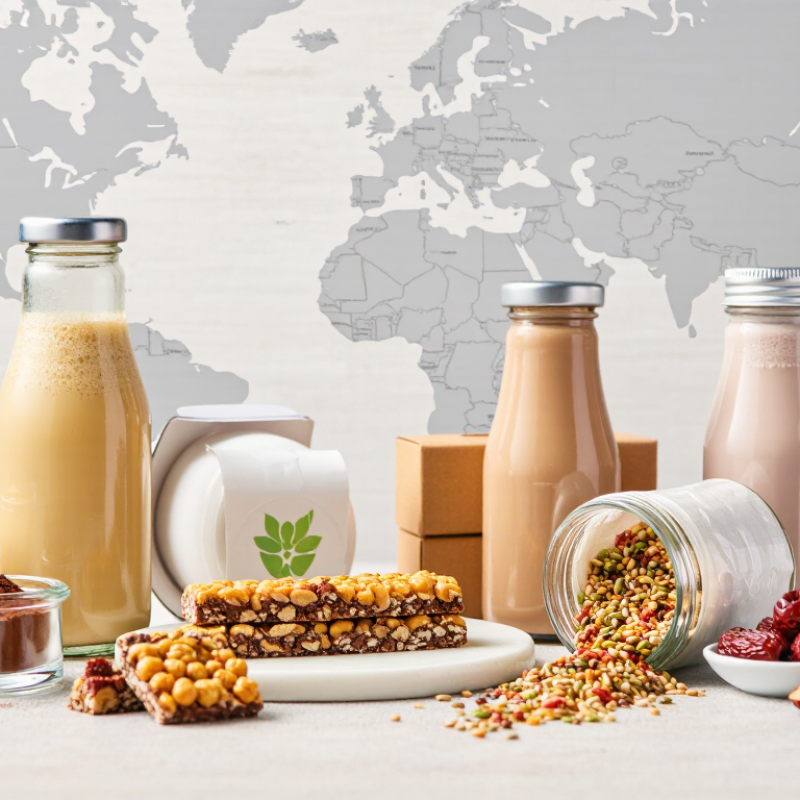
Global buyers are seeking food products that solve practical problems, not merely attract attention. Innovative food products now range from precision-formulated snacks to fermented drinks and upcycled ingredient blends. A strong product balances taste, nutrition, cost, safety, and reliable supply. For example, a high-protein bar may use chickpeas, cocoa, and dates. Its success depends on texture, allergen control, and stable shelf life. Buyers also examine packaging weight, storage temperatures, and regional consumer habits. A product that performs well in Singapore may need reformulation for Germany or Brazil. Local fit matters.

Experienced importers request clear specifications, laboratory results, traceability records, and evidence supporting nutrition claims. They review HACCP-based controls, allergen declarations, certificates, and each market’s labeling rules. These details build confidence across distributors, retailers, and foodservice operators. Yet innovation is not automatically valuable. Some colorful concepts fail because they taste unfamiliar, cost too much, or cannot scale consistently. That is the uncomfortable part. Developers should test products with real consumers and invite critical feedback early. They should also measure repeat purchases, not only launch excitement. Responsible sourcing deserves equal attention, including farmer relationships, water use, and realistic environmental claims. No product is perfect. Global buyers need transparent partners who admit limitations and improve them. This guide explores practical categories, evaluation criteria, and emerging opportunities for international food trade. Its purpose is simple: help buyers distinguish genuine progress from attractive packaging. Better questions often lead to better products.
What Are Innovative Food Products For Global Buyers?

Market Need: FAO Estimates 13.2% of Food Is Lost Before Retail

Global buyers are seeking food products that survive long supply chains with less loss. FAO estimates that 13.2% of food is lost before retail, from harvest through distribution. This figure shows a serious market gap, not just a logistics problem. Products with longer shelf lives can protect value in hot, humid, or remote markets. Examples include aseptic foods, dried vegetables, frozen ingredients, and carefully formulated ready-to-cook products. However, shelf stability must not reduce nutrition or consumer acceptance. That balance remains difficult.

Product developers should study local storage conditions before choosing an innovation. A low-water product may perform well where refrigeration is unreliable. Portion-controlled formats can also reduce leftovers in food service and households. The FAO Food Loss Index highlights how losses vary across commodities and supply-chain stages. Meanwhile, the UN Environment Programme reported 1.05 billion tonnes of food waste at retail, food service, and household levels in 2022. These findings support demand for smaller packs, clear date information, and products made from safe surplus ingredients. Upcycled ingredients may create value, but buyers need traceable sourcing and consistent specifications. Data quality is still uneven. That deserves scrutiny.

Reliable suppliers should provide shelf-life testing, moisture-control results, transport simulations, and nutrition data. Buyers should also ask whether packaging improves protection or merely increases material use. A practical product is not automatically a sustainable product. Field trials with distributors and end users can expose failures early, especially damaged seals or unfamiliar preparation steps. Imperfect pilots are useful. They reveal what laboratory testing misses.
Core Categories: Plant-Based, Fermented, Cultivated, and Upcycled Foods

Global buyers are seeking food products that combine nutrition, traceability, and practical convenience. Four categories are shaping current conversations: plant-based, fermented, cultivated, and upcycled foods. Plant-based products now extend beyond basic meat substitutes. Think oat-based drinks, pulse snacks, and mushroom-filled meals with recognizable ingredients. Fermented foods bring acidity, depth, and potential digestive benefits. Buyers still need clear evidence, because “natural” claims can mislead. Taste remains decisive. A clean label cannot rescue poor texture.

Cultivated foods attract attention through controlled production and possible resource efficiencies. Yet scaling, consumer acceptance, and local approval requirements remain serious questions. Responsible buyers should examine production methods, safety documentation, shelf-life tests, and cold-chain needs. Upcycled foods use overlooked ingredients, such as fruit pulp, spent grains, or vegetable stems. This approach can reduce waste while creating new revenue. However, supply may vary by season. That weakness deserves honest planning. In my experience, buyers respond better to measurable sourcing data than dramatic sustainability language.

Tips: Request samples from different batches. Compare flavor, texture, packaging, and storage performance. Ask suppliers for origin records and independent test results. Check whether claims match the product’s actual formulation. Start with a small market trial. It may reveal problems early. Do not assume every innovative product fits every culture. Local cooking habits can change acceptance quickly. Some products need better education. Others simply need reformulation.

What Are Innovative Food Products For Global Buyers? – Core Categories: Plant-Based, Fermented, Cultivated, and Upcycled Foods
Core Category Representative Product Formats Primary Raw Materials Core Production Method Key Functional or Nutritional Value Typical Buyer Applications Important Sourcing Considerations Commercial Readiness
Plant-Based Foods Meat alternatives, plant-based beverages, dairy-free yogurt, egg substitutes, protein snacks, and ready meals. Soy, peas, fava beans, lentils, chickpeas, oats, wheat, rice, potatoes, nuts, and seeds. Protein isolation or concentration, milling, extrusion, blending, fermentation, emulsification, and heat treatment. Provides plant-derived protein, dietary fiber, and a wide range of textures and flavors. Nutritional quality varies by crop and formulation. Retail private-label products, foodservice menus, frozen foods, convenience meals, sports nutrition, and institutional catering. Check allergen declarations, protein content, amino-acid profile, texture stability, flavor masking, crop origin, and local labeling rules. Established in many markets, with continued product development focused on taste, price, clean labels, and improved texture.
Fermented Foods Fermented vegetables, cultured dairy alternatives, tempeh, miso-style products, sourdough foods, fermented beverages, and microbial-protein ingredients. Soybeans, grains, vegetables, fruits, legumes, milk or plant-based milks, yeasts, lactic-acid bacteria, and filamentous fungi. Controlled fermentation using selected or traditional microorganisms, followed by cooling, drying, pasteurization, or refrigeration where required. Can improve flavor complexity, digestibility, texture, and shelf stability. Some products contain live cultures, although viability depends on processing and storage. Premium natural foods, gut-health products, specialty beverages, alternative proteins, sauces, snacks, and culinary ingredients. Verify microbial cultures, fermentation controls, pH, water activity, cold-chain requirements, shelf life, and claims concerning probiotics or health benefits. Mature for traditional foods; rapidly expanding for precision-fermented ingredients and next-generation protein applications.
Cultivated Foods Cultivated meat, cultivated poultry, cultivated seafood, cultivated fat, and cell-derived ingredients for hybrid food products. Animal cells, growth media components, edible scaffolding materials, and food-grade processing inputs. Cell selection, cell expansion in controlled vessels, differentiation into target tissues, harvesting, and formulation into food products. Produces animal-cell-derived products without raising and slaughtering whole animals. Product composition, sensory quality, and process efficiency depend on the technology used. Specialty foodservice, premium products, research-led food development, hybrid formulations, and markets with defined regulatory pathways. Confirm market authorization, facility approval, production scale, cell-line documentation, media composition, allergen status, labeling, and import requirements. Emerging and highly regulated; availability is limited to jurisdictions where the relevant product and facility have received authorization.
Upcycled Foods Products made from fruit and vegetable pulp, cereal by-products, spent grains, oilseed press cakes, coffee by-products, and surplus or imperfect produce. Food-grade side streams and surplus ingredients generated during farming, food processing, milling, brewing, juicing, and oil extraction. Collection, sorting, stabilization, drying, milling, extraction, concentration, fermentation, or incorporation into new food formulations. Can recover fiber, protein, oils, pigments, minerals, and flavor compounds while reducing food-processing losses. Nutrient composition depends on the source material. Bakery products, snack bars, cereals, beverages, sauces, dietary fiber ingredients, animal-free protein blends, and foodservice products. Assess traceability, food-safety controls, contaminant testing, seasonality, moisture stability, consistency, supply volume, and substantiation of waste-reduction claims. Commercially available across multiple ingredient and finished-food applications, with scalability tied to reliable side-stream supply.
Buyer note: Product suitability depends on destination-market regulations, ingredient specifications, allergen requirements, shelf-life validation, certifications, logistics, and verified sustainability documentation.

Nutrition Filter: WHO Limits Free Sugars to Below 10% of Energy

Global buyers are screening food innovation through a stricter nutrition filter. The WHO recommends keeping free sugars below 10% of daily energy intake. For a 2,000-calorie diet, that equals less than 50 grams daily. The guideline suggests benefits below 5%, or about 25 grams. Free sugars include added sugars, honey, syrups, fruit juice, and juice concentrates. Source: WHO, Guideline: Sugars Intake for Adults and Children, 2015.

This standard changes how new products are developed. Reduced-sugar drinks can use acidity, spices, fermentation, or natural aroma to protect taste. High-fiber snack formats may improve texture while supporting slower eating. However, fruit concentrate is not a simple escape route. It still contributes free sugars. Buyers should request laboratory nutrition data, ingredient calculations, and serving-size verification. A short ingredient list is helpful, but it does not prove nutritional quality.

EFSA’s Scientific Opinion on Tolerable Upper Intake Levels, published in EFSA Journal in 2022, found that sugar-related health risks rise with higher intake and recommended keeping sugars as low as possible within a balanced diet. That creates space for products with less sweetness and more protein, fiber, or micronutrient density. Yet low sugar can produce a thin mouthfeel. I would not call every low-sugar formula innovative. Taste testing, shelf-life trials, and transparent evidence still matter. Sometimes the first recipe is not good enough.

Innovative Food Product Nutrition Filter: WHO Free Sugar Limits

Calculated daily free-sugar thresholds by total energy intake. WHO recommends keeping free sugars below 10% of total energy, with additional benefits below 5%.

Values are calculated using 4 kcal per gram of sugar: energy intake × 10% or 5% ÷ 4. For a 2,000-kcal diet, the WHO thresholds are below 50 g per day and, for additional health benefits, below 25 g per day. Food developers can use these limits when screening innovative products for global buyers.

Buyer Standards: Codex HACCP, Novel-Food Rules, and Full Traceability

Innovative food products attract global buyers, but novelty alone rarely earns approval. Buyers examine safety systems before flavor claims. In supplier audits, experienced teams look for evidence that procedures work on the factory floor. Paperwork matters. Codex guidance can support hygiene controls, while HACCP identifies hazards from receiving through dispatch. A hazard map should name temperature limits, allergen risks, and corrective actions. Vague procedures create doubt.

Novel-food rules require careful product history, ingredient evidence, and market-specific review. An ingredient accepted in one jurisdiction may need separate assessment elsewhere. Suppliers should maintain composition specifications, processing details, safety studies where required, and evidence for intended use. Regulatory review should begin before pilot production. Too many teams wait. This delays launches and weakens buyer confidence. Some documents may also contain assumptions that deserve challenge.

Full traceability connects each lot to its origin, production line, storage condition, and final shipment. A buyer should be able to trace a questionable batch within hours, not days. Digital records help, but they do not replace trained staff. Keep supplier codes, lot numbers, temperature logs, and release checks aligned. Run mock recalls with realistic pressure. I would not promise perfect traceability. Data can be incomplete, especially during manual transfers. That uncomfortable gap deserves testing. Better to expose a weakness during an exercise than during a real market investigation.

Commercial Fit: UNEP Reports 1.05 Billion Tonnes of Food Waste in 2022

Global buyers are looking beyond novelty. They want food products that solve measurable supply-chain problems.

The UNEP Food Waste Index Report 2024 estimates that 1.05 billion tonnes of food were wasted in 2022. Households caused 60% of this waste, food service 28%, and retail 12%.

These figures create commercial space for shelf-stable ingredients, portion-controlled meals, and products made from cosmetically imperfect produce.

An innovative product must survive real logistics.

Buyers may assess moisture control, packaging strength, storage temperature, and usable shelf life before purchasing.

A dried vegetable blend can reduce spoilage during transport. A concentrated soup base can lower water, weight, and storage costs. Upcycled ingredients may also attract buyers, but their safety documentation and sensory consistency must be clear.

FAO reports that food loss and waste contribute significantly to global greenhouse-gas emissions, making waste reduction relevant to both procurement and sustainability teams.

The market is not simple.

Not every rescued ingredient fits a profitable product. Processing costs can exceed the value of recovered food, especially where collection systems are weak.

UNEP also notes that household waste remains substantial across high-, middle-, and low-income countries, so solutions must match local habits rather than assume expensive technology.

Global buyers should request:

traceability records, microbial testing, shelf-life evidence, and transparent claims.

The 1.05-billion-tonne figure is powerful, but it does not guarantee demand. Product developers still need to test taste, price, repeat purchasing, and regional regulations with actual customers.