Best Food Processing Machinery Manufacturers in China

Choosing among China’s food processing machinery manufacturers requires more than comparing prices or polished factory videos. A stainless-steel mixer may look ready for production, yet its performance depends on product consistency, batch size, cleaning access, and controls. Ask how the machine handles your actual ingredients, not just a standard demonstration. Small details matter: weld finish, drain points, guarded belts, and readable temperature displays.

Food processing technology author Peter Fellows’ work emphasizes matching equipment to the product and process. That principle is useful when reviewing Chinese suppliers. A bakery line, a fruit-pulp system, and a meat-processing machine face different operating demands. Request material specifications, test records, installation requirements, spare-parts information, and references for comparable projects. Where possible, arrange a product trial using your own recipe. A catalogue cannot prove that a machine will suit your plant.

Look beyond the quotation. Check whether the manufacturer explains capacity assumptions, service response, operator training, and what is excluded from the price. These conversations can reveal gaps before equipment ships. Still, no checklist guarantees a good outcome. Supplier claims need independent verification, and a factory visit may not represent every production run. The strongest choice is not always the largest or cheapest maker. It is the manufacturer that can clearly show how its equipment fits your process—and where its limits are.
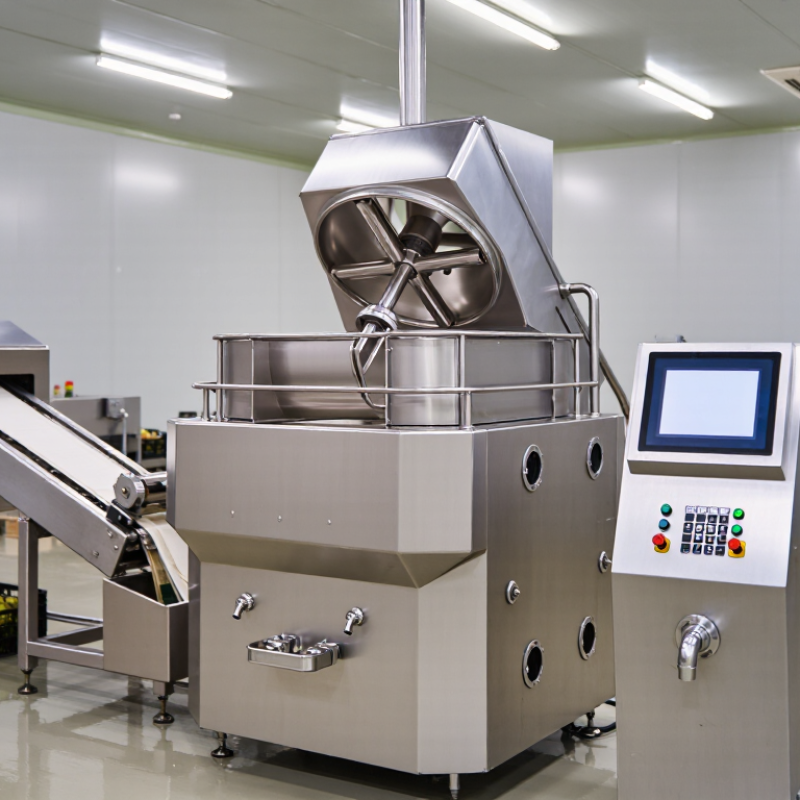
Best Food Processing Machinery Manufacturers in China

What Food Processing Machinery Manufacturers Do and the Equipment They Produce

Food processing machinery manufacturers turn production requirements into equipment that handles ingredients consistently. Their work may include process planning, machine design, fabrication, installation, and operator training. Equipment should suit the product, target output, floor space, and cleaning routine. Small details matter. A poorly placed drain can leave water beneath a conveyor.

Typical equipment includes washers, cutters, mixers, grinders, ovens, chillers, fillers, sealers, and conveyors. A vegetable line might use a washer, slicer, blancher, and cooling section. A bakery may need mixers, proofers, ovens, and packaging units. Manufacturers also specify food-contact materials, guards, sensors, and controls. They should explain operating limits, cleaning access, spare-part needs, and maintenance requirements. Paper specifications have limits. Actual output can vary with ingredient size, moisture, and staff routines.

Tips: Ask for a process-flow drawing and the test conditions behind each capacity figure. Check whether parts can be removed without awkward lifting. If possible, inspect a running line rather than polished photos. That extra step helps.

Best Food Processing Machinery Manufacturers in China - What Food Processing Machinery Manufacturers Do and the Equipment They Produce

Processing Stage Equipment Produced What the Equipment Does Typical Food Applications Key Manufacturing Considerations
Preparation and cleaning Washers, rinsing systems, sorting conveyors, inspection tables Removes soil and loose debris, moves ingredients through the line, and supports manual or automated inspection. Fresh vegetables, fruit, root crops, and selected seafood ingredients Product handling, drainage, cleanability, water management, and suitable food-contact surfaces
Size reduction Cutters, dicers, slicers, shredders, grinders, and mills Reduces ingredients to specified sizes or forms for further processing or direct use in a recipe. Produce, meat, grains, spices, and prepared-food ingredients Cut consistency, blade or grinding-tool selection, product temperature, and safe access for cleaning
Mixing and blending Ribbon blenders, paddle mixers, dough mixers, and liquid blending tanks Combines ingredients to distribute solids, liquids, seasonings, or other recipe components evenly. Bakery dough, sauces, seasonings, snack mixes, and powdered food blends Batch size, mixing intensity, ingredient behavior, discharge design, and prevention of cross-contamination
Thermal processing Cooking kettles, steamers, ovens, fryers, and blanchers Applies controlled heat to cook, soften, blanch, bake, or fry food according to the process requirement. Ready meals, vegetables, bakery products, sauces, snacks, and fried foods Temperature control, heating uniformity, process monitoring, energy use, and product-specific validation
Separation and extraction Presses, sieves, filters, centrifuges, and pulping equipment Separates liquids from solids or divides a mixture into fractions using pressing, screening, or centrifugal force. Fruit and vegetable juices, edible oils, dairy ingredients, and starch processing Separation efficiency, screen or filter selection, product yield, and hygienic access to internal components
Forming and portioning Depositors, portioning machines, forming machines, and encrusting equipment Measures or shapes food into repeatable portions and product formats. Bakery items, confectionery, dumplings, meat products, and formed snacks Portion accuracy, product texture, changeover time, and adjustment for different recipes or formats
Cooling and freezing Cooling conveyors, chillers, blast freezers, and freezing tunnels Removes heat from processed food or freezes it to support the required product handling and storage process. Cooked foods, bakery products, seafood, meat, fruit, and prepared meals Product loading, airflow or refrigerant performance, temperature monitoring, and condensation control
Filling and packaging Liquid fillers, powder fillers, weighing systems, sealers, and packaging conveyors Measures product into containers or packs and closes the package using a suitable sealing method. Beverages, sauces, powders, snacks, frozen foods, and portioned products Product viscosity or particle size, package compatibility, fill accuracy, seal integrity, and line integration
Conveying and line integration Belt, roller, and screw conveyors; elevators; and automated transfer systems Moves ingredients, work-in-progress, or finished products between processing operations. Food production lines across bakery, produce, meat, dairy, and packaged-food facilities Product orientation, transfer points, speed coordination, guarding, and access for inspection and sanitation
Cleaning and sanitation support Washdown-compatible equipment, clean-in-place systems, and sanitation components Supports the removal of food residues from equipment and process circuits using methods suited to the installation. Wet-processing lines, beverage systems, dairy operations, and other hygienic production areas Drainability, material compatibility, cleaning access, documented procedures, and facility-specific hygiene requirements

Note: Equipment configurations and performance depend on the product, recipe, process conditions, facility layout, and required production rate. Food-contact materials and hygiene features should be specified for the intended application and applicable local regulations.
How to Evaluate Food Processing Machinery Manufacturers in China

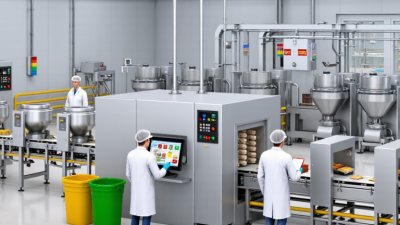
Choosing among food processing machinery manufacturers in China requires more than comparing quoted prices. During factory audits, I check whether stainless steel surfaces are smooth, welds are polished, and product-contact parts have traceable material certificates. A reliable manufacturer should explain cleaning access, temperature control, and spare-parts availability without vague promises. Ask for a complete test video using a product similar to yours.

Market data supports careful evaluation. Grand View Research estimates the global food processing equipment market reached about USD 52.4 billion in 2022, with continued growth through 2030. This expansion attracts capable suppliers, but also inexperienced workshops. ISO Survey data consistently places China among the world’s largest holders of ISO 9001 certificates. Certification helps, yet it does not prove that every machine is hygienically designed or easy to maintain.

Request factory acceptance testing with measurable standards. Check output per hour, energy use, noise, cleaning time, and rejection rates. Require drawings, electrical diagrams, manuals, and a warranty written in clear English. Verify whether the manufacturer controls machining and assembly internally. Subcontracting is not automatically a problem. Poor documentation is. A practical trial should include your real recipe, viscosity, particle size, and packaging format. Some buyers overlook this step, including experienced teams. That mistake can create expensive modifications after installation. Evaluate response speed, engineering questions, and after-sales support before signing. The cheapest quotation may become the costliest option.

Key Manufacturing Regions and Industry Specializations in China

China’s food processing machinery industry is concentrated around strong manufacturing and food-production clusters. The Yangtze River Delta, including Jiangsu, Zhejiang, and Shanghai, is known for automated filling, labeling, weighing, and hygienic stainless-steel systems. Its dense supplier network supports short lead times and reliable component sourcing. The China Food and Packaging Machinery Industry Association reports that China remains one of the world’s largest production bases for food machinery, with packaging equipment representing a major share of industry output.

The Pearl River Delta focuses heavily on beverage, bakery, prepared-food, and flexible packaging equipment. Guangdong’s export-oriented factories often build compact production lines for high-speed processing and frequent product changes. In Shandong, machinery makers are closely connected to grain, edible oil, meat, and cold-chain industries. Henan has deeper expertise in grain milling and flour processing, supported by its agricultural base. According to UN Comtrade data, China is also a major exporter of food-processing and packaging machinery, although product categories differ across reporting systems.

These regional labels are helpful, but not absolute. A factory in Zhejiang may offer meat-processing equipment, while a Shandong supplier may produce advanced packaging lines. Buyers should check factory audits, test videos, hygienic design records, and after-sales response times. Published statistics can lag behind actual capacity. That gap deserves attention.

(Mordor Intelligence, China Food Processing Machinery Market Report, 2024; China Food and Packaging Machinery Industry Association, industry reports.)

Leading Chinese Manufacturers by Machinery Category

China’s food machinery sector is best understood by category, not by a single league table. “Leading” can mean strong engineering, dependable output, or useful customization. Buyers should compare those qualities against the food and production volume they actually handle.

For fruit and vegetable preparation, manufacturers build washing, sorting, peeling, and dicing equipment. Look closely at water recirculation, belt width, and how easily blades or screens can be removed. Grain and bakery machinery makers focus on milling, mixing, forming, and baking. Consistent temperature control and dough handling matter more than an impressive maximum capacity. In meat and seafood processing, hygienic layouts, guarded cutting zones, and quick-clean surfaces deserve close inspection. Details matter.

Packaging and filling equipment is another major category, covering weighing, sealing, labeling, and case packing. Ask suppliers to demonstrate a changeover between two container sizes, not just steady operation on one product. Test the changeover. Request material specifications for product-contact surfaces, a realistic acceptance test, and clear spare-parts lead times. A catalog may show tidy lines and fast speeds; it may not reveal cleaning downtime or performance with irregular ingredients. Those gaps are worth discussing before comparing quotations.

Best Food Processing Machinery Manufacturers in China

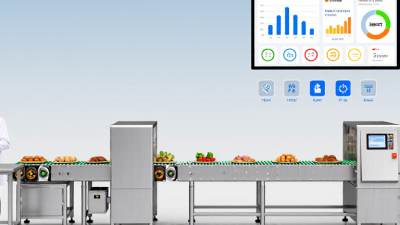
China’s food-processing machinery industry covers a broad range of production stages, from bakery and confectionery processing to meat, fruit, vegetable, brewing, and general food equipment. The chart compares representative machinery categories by their typical application breadth across food-processing lines.

The index reflects the relative breadth of industrial applications for each machinery category, with 100 representing the broadest application coverage.

How to Verify Quality, Compliance, and After-Sales Support

Choosing food processing machinery in China requires more than comparing prices and photographs. During a factory audit, inspect stainless steel surfaces, welds, seals, and product-contact areas closely. Rough welds can trap residue and complicate cleaning. Ask for material certificates, electrical test records, and documented production tolerances. Request a factory acceptance test using your actual ingredients, not only water. Small details matter.

Compliance evidence should match the destination market and the machine’s intended use. Review risk assessments, operating manuals, wiring diagrams, and sanitation procedures before signing. Confirm that safety guards, emergency stops, and control systems meet applicable local requirements. A certificate alone is not enough. Check its issuing body, scope, date, and machine model. Standards can be misunderstood.

After-sales support deserves equal attention. Ask how quickly engineers respond, which spare parts are stocked, and whether remote diagnosis is available. Put response times, training, installation, and warranty exclusions into the contract. Speak with recent customers, if possible, and request service records. A polished factory tour can mislead. I have seen impressive demonstrations hide weak documentation and delayed support. The uncomfortable question is practical: who will repair the machine at 2 a.m. during a production stoppage? JSImport