Finding reliable food processing machinery manufacturers in 2026 requires more than comparing prices online. Processing equipment affects hygiene, product consistency, labor costs, and production safety. A weak supplier choice can create months of delays. Sometimes, the cheapest quotation becomes the most expensive decision.
A practical search begins with the product and process. Define the required capacity, ingredients, temperature range, cleaning method, and automation level. A bakery line needs different equipment from a dairy, beverage, or frozen-food facility. Clear specifications help manufacturers provide useful proposals instead of vague estimates. Look for suppliers with documented factory experience, relevant certifications, traceable components, and accessible technical support. Ask for videos of operating machines, reference installations, testing procedures, and maintenance records. These details reveal more than attractive catalog images.
Supplier evaluation should also include communication quality. Can the team explain a control panel clearly? Will engineers help with layout, installation, training, and spare parts? Request a realistic delivery schedule and confirm what the quotation includes. Freight, commissioning, electrical standards, and after-sales service can change the final cost substantially. A factory visit or live demonstration remains valuable, even when remote meetings are convenient. There is no perfect shortlist. Specifications may change after trials, and early assumptions can be wrong. Treat those discoveries as useful warnings, not failures. This guide explains how to compare food processing machinery manufacturers with stronger evidence, practical questions, and a careful view of long-term performance.
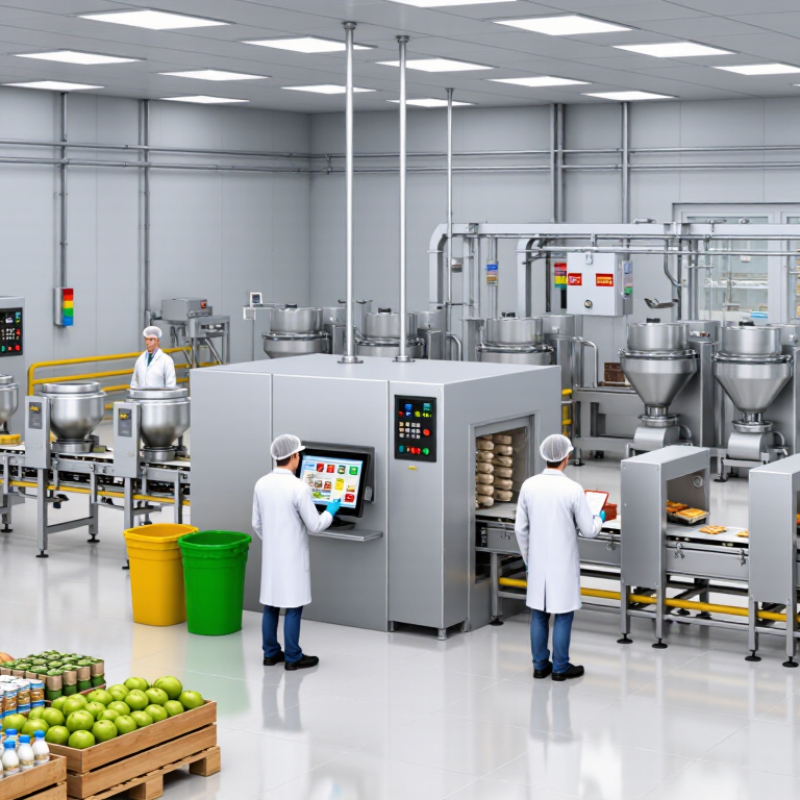
How to Find Food Processing Machinery Manufacturers 2026?
Define Your Food Processing Machinery Requirements
A reliable machinery search begins with a precise production brief. Describe the food product, texture, moisture level, and expected daily output. A sauce line may need gentle mixing, while frozen vegetables require different cutting and cooling conditions.
Write down target capacity in kilograms per hour. Include batch size, available floor space, electrical supply, water access, and drainage points. Measure door widths and ceiling height. Small details can stop a large machine from entering your facility.
Consider product-contact materials, cleaning methods, operator safety, and automation needs. Request documented information about hygienic design, maintenance intervals, spare parts, and testing procedures. Ask manufacturers to process your samples before making a decision. A short trial can reveal sticking, uneven cutting, or excessive waste. Paper specifications are not enough.
Tips: Prepare a simple requirement sheet before contacting manufacturers. Add product photos, sample dimensions, output targets, and working conditions. Ask for utility consumption, noise levels, installation space, and training details. Compare complete operating costs, not only purchase prices.
Be realistic about future growth. A machine sized for maximum capacity may waste energy during normal production. However, choosing the cheapest option can create expensive bottlenecks later. Recheck your assumptions with production staff and maintenance technicians. Their practical concerns are often missed in office planning. Leave room for correction. Requirements sometimes change after the first production test.
| Requirement Area | What to Define Before Contacting Manufacturers | Typical Planning Reference | Information to Request | Priority |
|---|---|---|---|---|
| Product Type | Identify the food product, recipe, physical condition, and required processing stages. | Fresh, frozen, liquid, powder, dough, meat, seafood, fruit, vegetables, bakery products, or prepared meals. | Process flow diagram, product samples, ingredient list, viscosity, temperature, and sensitivity to shear or pressure. | Critical |
| Required Throughput | Define the target output per hour, operating days, shifts, and expected future growth. | State capacity in kg/h, t/h, units/min, or litres/h; include a peak-demand allowance where applicable. | Guaranteed capacity, test results, feed-rate limits, changeover losses, and performance at minimum and maximum loads. | Critical |
| Finished Product Specification | Define the required size, weight, texture, moisture, temperature, appearance, and allowable variation. | Examples include cut thickness in mm, fill weight in g, particle size in mm, or product temperature in °C. | Tolerance limits, sampling method, inspection frequency, and factory acceptance test criteria. | Critical |
| Equipment Configuration | Determine whether a single machine, integrated line, or complete solution is required. | Common stages include conveying, washing, cutting, mixing, cooking, cooling, filling, sealing, inspection, and packing. | Layout drawing, line balance, interface points, control architecture, conveyor heights, and equipment footprint. | High |
| Food-Contact Materials | Specify materials for product-contact surfaces, seals, gaskets, pipes, and fasteners. | Food-contact areas commonly use stainless steel grade 304; grade 316 is often selected for high-salt, acidic, or corrosive environments. | Material certificates, surface-finish information, gasket specifications, weld details, and corrosion-resistance documentation. | Critical |
| Hygienic Design | Define cleanability, drainage, access, contamination control, and allergen-changeover requirements. | Look for smooth and accessible surfaces, minimized product traps, sloped drainage, removable parts, and hygienic welds. | Cleaning procedure, sanitation time, chemical compatibility, cleaning-in-place capability, and hygienic design assessment. | Critical |
| Utilities | Confirm electrical, compressed-air, water, steam, gas, refrigeration, drainage, and ventilation requirements. | Electrical supply may commonly be 380–415 V and 50 Hz in many regions, but the final specification must match the installation country. | Connected load, peak load, air pressure and consumption, water flow, steam pressure, heat load, and utility connection drawings. | Critical |
| Automation and Data | Define the required level of automation, operator controls, traceability, alarms, and production data collection. | Possible functions include recipe management, touchscreen controls, batch records, remote diagnostics, and production reporting. | Control-system architecture, data-export format, user-access levels, cybersecurity measures, and integration protocol. | High |
| Safety and Compliance | Identify the legal, electrical, machinery-safety, food-hygiene, and workplace requirements for the target market. | Potential requirements include HACCP-based controls, GMP practices, ISO 22000-based food-safety systems, risk assessment, guarding, and emergency stops. | Declaration of conformity where applicable, risk assessment, manuals, safety-circuit details, test reports, and compliance certificates. | Critical |
| Installation and Facility Fit | Check available floor space, ceiling height, access routes, floor loading, drainage, temperature, and humidity. | Allow space for operation, sanitation, inspection, maintenance, product flow, and safe removal of major components. | General arrangement drawing, foundation loads, lifting points, installation sequence, commissioning plan, and site requirements. | High |
| Maintenance and Spare Parts | Define preventive-maintenance intervals, expected service life, critical spare parts, and local technical support. | Consider wear parts such as blades, seals, belts, filters, bearings, sensors, and pumps according to the machine type. | Spare-parts list, recommended stock, maintenance schedule, response time, training plan, warranty terms, and service coverage. | High |
| Acceptance Testing | Set objective criteria for proving capacity, product quality, safety, sanitation, and reliability before final acceptance. | Use agreed product samples and operating conditions for factory acceptance testing and site acceptance testing. | Test protocol, performance records, defect limits, corrective-action process, training records, and final acceptance documentation. | Critical |
| Total Cost of Ownership | Compare purchase price with installation, utilities, labor, sanitation, maintenance, spare parts, downtime, and disposal costs. | Evaluate cost per kg or unit produced rather than comparing equipment price alone. | Itemized quotation, energy consumption, staffing assumptions, consumables, warranty exclusions, delivery terms, and lifecycle-cost estimate. | High |