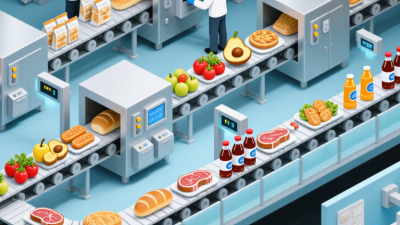
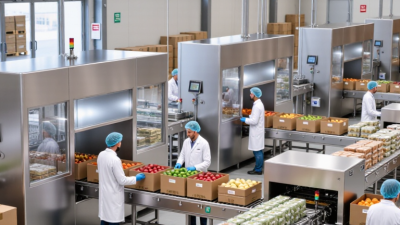
How to Choose Innovative Food Processing Equipment
Choosing innovative food processing equipment is not a contest to buy the newest machine. It is a decision about product quality, operating costs, worker needs, and reliable production. A stainless-steel cooker may promise faster heating, but the useful questions are practical: Does it heat evenly? Can operators clean it thoroughly? Will it handle the ingredients and batch sizes you actually use?
Food engineering scholar R. Paul Singh has written extensively about the science behind processing, including heat and mass transfer. The following is a paraphrase of that engineering perspective, not a verbatim quotation: “Choose equipment for the process it controls, not simply for its novelty.” That distinction matters. Compare measurable performance, such as temperature consistency, throughput, energy use, and product losses. Ask suppliers for trial results using ingredients similar to yours. Inspect the controls, changeover steps, and cleaning access. A glossy touchscreen is not proof of better processing.
The right choice depends on your facility. A compact line may suit a small producer, while a larger plant may need automated monitoring and flexible capacity. Check maintenance support, spare-part availability, training, and integration with existing equipment. Then test the machine under realistic conditions. Watch a full production run. Note where operators pause, where product accumulates, and how much water cleaning requires. Some estimates will be imperfect. That is worth admitting. Pilot trials can expose gaps that brochures miss, and a careful review can prevent an expensive mismatch. Innovative food processing should improve a real process—not add complexity for its own sake.
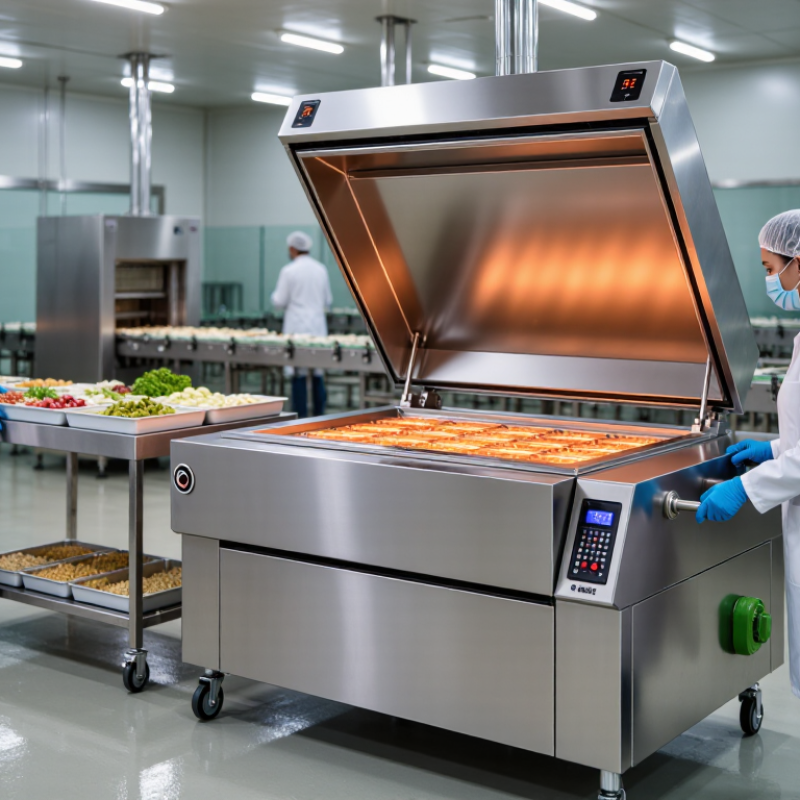
Define Production Needs and Processing Requirements
How to Choose Innovative Food Processing Equipment
Define Production Needs and Processing Requirements
Before comparing machines, map the product and the actual production day. Record target output per hour, batch size, operating shifts, and seasonal peaks. Note whether ingredients arrive chilled, frozen, whole, or pre-cut. Start with the product. A useful specification also describes texture, moisture, particle size, and how much variation suppliers deliver.
FAO’s 2023 report on progress toward food-related Sustainable Development Goals estimates that 13.2% of food was lost globally in 2021, between harvest and retail. That figure covers many supply-chain stages, not processing alone. Still, it makes yield worth measuring: weigh incoming material, saleable output, trim, and rejects during representative runs. Define acceptable loss before selecting a cutting, mixing, heating, or drying system.
Translate the product brief into operating requirements: temperature range, residence time, changeover frequency, cleaning access, and available utilities. If a sauce foams or a fruit piece bruises easily, run a small pilot with real ingredients. Record throughput and product quality, not just the machine’s rated capacity. And forecasts are often wrong. Leave room for realistic growth, but avoid buying capacity that sits idle. A spreadsheet cannot capture every sticky or fragile batch. Check the line layout with operators, too; a perfect machine can still create awkward transfers or bottlenecks.
Identify Suitable Food Processing Technologies
Choosing food-processing technology starts with the food, not the machine. Map its shape, moisture, fragility, and safety needs, then define the required hourly output. Leafy herbs may need gentle washing and dewatering; firm root crops can tolerate abrasive peeling and faster conveying. Small trials matter. Test the actual crop and season, since maturity and incoming temperature can change yield and texture.
The FAO’s 2023 SDG progress report estimated that 13.2% of food was lost after harvest and before retail in 2021. That figure makes the location of losses a practical selection criterion. Match sorting, cooling, drying, or freezing technology to the specific point where damage occurs, rather than choosing a faster line by default. The UN Environment Programme’s Food Waste Index Report 2024 estimated 1.05 billion tonnes of food waste in 2022 across households, food service, and retail. Processing equipment cannot address every source, but reliable portioning and handling may help prevent avoidable defects.
Compare energy use per kilogram, water demand, changeover time, sanitation access, and product loss—not nameplate speed alone. Ask operators to record these measures during a pilot run. I would be cautious about assuming one technology suits every product; that shortcut can overlook cleaning needs or delicate textures. A slightly slower process may prove more suitable.
How to Choose Innovative Food Processing Equipment
Identify suitable technologies by matching the process to the product goal. These typical temperature ranges are illustrative, not equipment specifications; actual settings depend on the food, processing time, and food-safety requirements.
Selection guide: Chilling and freezing suit cold-chain preservation; blanching is commonly used before freezing or drying; pasteurization and UHT use heat for microbial control; hot-air drying reduces moisture. Validate any process for the specific product and applicable food-safety standards.
Evaluate Automation, Connectivity, and Innovation
Automation is useful only when it solves a measured constraint.
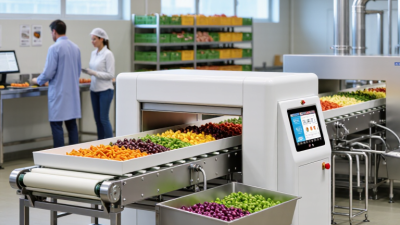
Track changeover time, rejects, and unplanned stops before comparing machines. On a washdown line, check whether sensors and control cabinets can tolerate frequent cleaning. Ask operators to test recipe changes, jam recovery, and manual overrides. Small details matter.
Connectivity should expose useful signals, not just add screens. Request a live demonstration of alarm history, production counts, and data export. Confirm how the equipment connects with existing controls, who can access production data, and what happens when the network drops.
Deloitte and MAPI’s 2024 Smart Manufacturing Survey found that 86% of surveyed manufacturing executives expect smart manufacturing to drive competitiveness within five years.
The survey covers manufacturing broadly, not food processors alone. Treat it as a direction, not a guarantee. Dashboards can distract.
Innovation needs evidence on the actual product and process.
The International Federation of Robotics reported 541,302 industrial robot installations worldwide in 2023, across industries; this shows wider adoption, not that every food line needs robotics. Run a product trial using your real ingredients, packaging, and target speed. Record yield, cleaning time, and operator interventions. A clever feature that adds difficult maintenance may not be an improvement. Ask for test conditions and results in writing, then compare them with your own baseline.
Compare Safety, Compliance, and Sustainability Features
When comparing food processing equipment, treat safety, compliance, and sustainability as working requirements, not brochure features. Look for fixed guards, clearly marked emergency stops, and controls operators can reach without leaning across hot or moving parts. Ask how the machine opens for cleaning, and inspect hinges, seals, and narrow product-contact gaps. These details can affect both hygiene routines and downtime. Small details matter. Request maintenance instructions and cleaning procedures before purchase; a polished demonstration may not reveal awkward access during a real shift.
Compliance depends on the equipment’s intended use and the rules that apply at your facility. Request material specifications, risk assessments, and records supporting relevant food-contact and safety requirements. Have qualified staff review them against local obligations. Sustainability needs evidence, too. Compare energy and water use under similar operating conditions, not just headline estimates.
A meter helps.
Consider changeover losses, cleaning cycles, spare-part availability, and expected service life. A machine that uses less power may still create avoidable waste if it is difficult to maintain. I would not assume one score captures everything; actual performance can vary with product, workload, and operator practices.
It is worth documenting those assumptions before making a decision.