Food processing technology is changing how manufacturers preserve food, manage quality, and meet demand. The stakes are substantial. FAO reported that 13.2% of food was lost after harvest and before retail in 2021. UNEP’s Food Waste Index Report 2024 estimated that 1.05 billion tonnes of food were wasted at retail, food-service, and household levels in 2022. These figures describe different stages, but both point to opportunities for better processing and handling.
This guide examines ten technologies shaping modern food production, from thermal processing and high-pressure processing to automation, sensors, and advanced packaging. The aim is practical: explain what each technology does, where it can help, and what trade-offs manufacturers should consider. A heat-treatment system may improve safety and shelf life, while still affecting texture or flavor. No single tool fits every product.
The evidence deserves careful reading. Adoption costs, product characteristics, and plant conditions vary, so a technology’s promise is not proof of performance in every facility. That distinction matters. The technologies below are presented as a useful overview, not a universal ranking. Readers should compare claims with product-specific trials and guidance from qualified food-safety professionals.
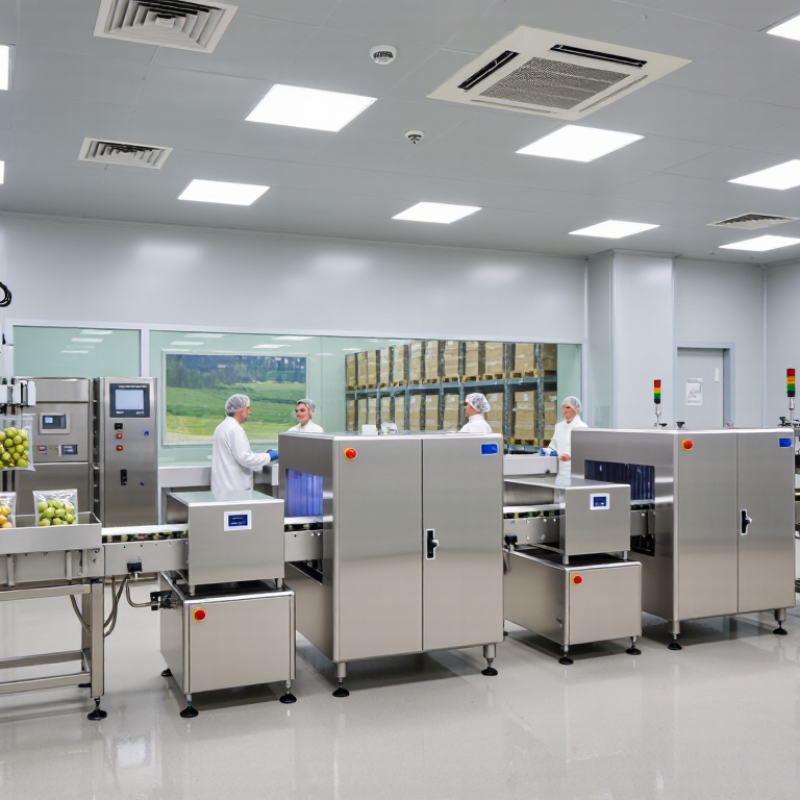
Thermal processing uses controlled heat to reduce pathogens and extend shelf life. For milk, the FDA’s 2023 Grade “A” Pasteurized Milk Ordinance specifies common treatments: 63°C for 30 minutes or 72°C for 15 seconds. These times and temperatures only work when the product reaches the required conditions throughout the process. A cold spot in a tank or uneven flow through a heat exchanger can undermine the intended treatment. Small details matter.
Sterilization targets commercial sterility, not the removal of every microorganism. In low-acid canned foods, FDA regulation 21 CFR Part 113 requires processors to establish and follow scheduled processes. Retort temperature alone is not enough: container size, food composition, and heat penetration also affect the treatment. Sensors and documented records help operators verify conditions inside the product, where temperatures rise more slowly than at the surface.
Pasteurization usually preserves more of a food’s fresh flavor, while sterilization can create cooked notes and softer textures. That trade-off is easy to overlook. Process validation should consider both microbial safety and product quality, then confirm performance with calibrated instruments and routine checks. No single heat schedule fits every food or package. References: FDA Grade “A” Pasteurized Milk Ordinance (2023); FDA 21 CFR Part 113.
Temperature and moisture control can determine whether produce stays crisp or becomes a costly loss. FAO’s 2019 State of Food and Agriculture estimated that 14% of food is lost between harvest and retail. Refrigeration slows microbial growth and respiration, but only when temperatures remain consistent. A warm loading bay can undo careful storage. Small shifts matter.
Freezing slows deterioration by turning available water into ice; it does not sterilize food. Rapid, even freezing helps limit large ice crystals that damage cell structure, while controlled thawing reduces drip loss. The International Institute of Refrigeration’s 2023 overview estimates that refrigeration accounts for roughly 20% of global electricity use. That makes insulated rooms, efficient airflow, and accurate temperature sensors quality tools and energy decisions.
Dehydration removes water that microbes need to grow. Operators should monitor product thickness, drying temperature, and final water activity, not rely on appearance alone. Thin apple slices may dry evenly; a crowded tray may retain damp centers. There is no perfect endpoint for every product. FAO’s loss estimate also varies by commodity and supply-chain stage, so processors should measure their own batches. A simple moisture check can reveal what the schedule misses.
Representative temperatures for refrigeration, freezing, and dehydration
Refrigeration slows microbial growth, while freezing at −18°C or below keeps food frozen and limits deterioration. Dehydration removes moisture; drying temperatures vary by food and process, with 55°C shown here as an illustrative value within a common 40–70°C range. These are representative values, not universal process specifications.
Fermentation turns microbial activity into a practical food-processing tool. Selected bacteria, yeasts, or molds transform sugars and other nutrients, changing flavor, texture, and shelf life. The process can create the tang of cultured vegetables or the soft structure of fermented dough. It is not simply leaving food to sit. Temperature, salt concentration, time, and hygiene all influence which organisms thrive.
In a vegetable batch, chopped cabbage releases moisture as salt draws out its juices. The vegetables should remain submerged in brine, while fermentation produces bubbles and a sharp, developing aroma. Small changes matter. Cooler conditions may slow acid production; warmer ones can speed it up and alter flavor. Processors monitor acidity and follow tested procedures rather than relying on smell alone. Fermentation does not make every food automatically safe.
At industrial scale, controlled tanks help maintain consistent temperatures and mixing, while sampling tracks acidity and microbial activity. These measurements support repeatable production, but they cannot remove every variation in raw ingredients. Not every batch behaves. A slightly different vegetable, starter culture, or temperature shift may change the final taste. That variability is part of fermentation’s appeal, though it also calls for careful records and adjustment. Processors must decide how much character to preserve without compromising consistent quality.
The examples below represent widely used fermentation approaches. Conditions are typical ranges or examples; exact parameters vary with the food, culture, and production method.
| Technology | Main Microorganisms | Typical Substrate | Biological Transformation | Typical Process Conditions | Food Applications |
|---|---|---|---|---|---|
| 1. Lactic Acid Fermentation | Lactic acid bacteria, including species of Lactobacillus, Lactococcus, and Leuconostoc | Milk, vegetables, grains, or other carbohydrate-containing foods | Microorganisms convert fermentable sugars mainly into lactic acid, lowering pH and developing characteristic flavor and texture. | Conditions depend on the culture and food; many processes use temperatures around 20–45°C and proceed until the desired acidity is reached. | Yogurt, cheese, sauerkraut, kimchi, and fermented vegetables |
| 2. Alcoholic Fermentation | Yeasts, commonly Saccharomyces cerevisiae | Sugar-rich fruit juices, cereal mashes, or dough | Yeasts convert sugars into ethanol and carbon dioxide. Carbon dioxide can leaven dough; ethanol is retained or removed depending on the process. | Many food and beverage fermentations operate around 20–30°C, though temperature and duration vary by product. | Bread, fermented beverages, and fermented fruit products |
| 3. Acetic Acid Fermentation | Acetic acid bacteria, including species in the family Acetobacteraceae | Alcohol-containing liquid, usually produced by an earlier fermentation | Under oxygen-rich conditions, bacteria oxidize ethanol to acetic acid. | Requires oxygen; many processes operate near 25–30°C, with aeration and acidity monitored during production. | Vinegar and vinegar-based food ingredients |
| 4. Propionic Acid Fermentation | Propionibacterium freudenreichii | Lactate in cheese curd | Propionic acid bacteria convert lactate into propionate, acetate, and carbon dioxide; the gas forms characteristic eyes in certain cheeses. | Used during cheese ripening; warmer ripening stages are often around 20–25°C, depending on the cheese-making process. | Swiss-type cheeses, including cheeses with characteristic round holes |
| 5. Koji-Based Solid-State Fermentation | Food-grade strains of Aspergillus oryzae | Steamed rice, barley, or soybeans | The mold produces enzymes that break down starches and proteins into smaller sugars, peptides, and amino acids for subsequent processing or fermentation. | Moisture, temperature, and airflow are controlled; cultivation commonly takes place in the approximate range of 25–35°C. | Starter preparation for miso, soy sauce, sake, and other fermented foods |
| 6. Tempeh Fermentation | Food-grade Rhizopus molds, including strains used in tempeh production | Cooked, dehulled soybeans or other prepared legumes | The mold grows through the beans, binding them into a firm cake and modifying their flavor and texture. | Typically fermented with access to air at about 30–32°C for roughly 24–48 hours; exact time depends on the process. | Tempeh and other fermented legume foods |
| 7. Sourdough Mixed-Culture Fermentation | A community of yeasts and lactic acid bacteria | Flour and water | Yeasts produce carbon dioxide that leavens the dough, while lactic acid bacteria produce acids that contribute to flavor and dough properties. | Fermentation time and temperature vary widely; starters may be refreshed regularly and dough may ferment from several hours to longer periods. | Sourdough breads and other fermented baked goods |
| 8. Cocoa Bean Fermentation | A natural succession of yeasts, lactic acid bacteria, and acetic acid bacteria | Sugary pulp surrounding fresh cocoa beans | Microbes consume pulp sugars and generate heat, acids, and aroma precursors that help develop the beans' characteristic chocolate flavor during later processing. | Usually carried out in heaps or boxes for about 5–7 days; temperature and microbial activity change over the fermentation. | Fermented cocoa beans for cocoa and chocolate production |
| 9. Fungal Biomass Fermentation | Food-production strains of filamentous fungi, such as Fusarium venenatum | Sugars and mineral nutrients in a liquid growth medium | Fungi grow as edible biomass in a controlled fermentation, producing protein-rich material that can be processed into food ingredients. | Typically uses submerged, aerated cultivation with close control of temperature, oxygen transfer, and nutrient supply. | Mycoprotein foods and fungal-protein ingredients |
| 10. Precision Fermentation | Selected or genetically modified yeasts, bacteria, or fungi, depending on the target ingredient | Sugars and nutrients in a controlled fermentation medium | Microorganisms are cultivated to produce a specific target molecule, such as an enzyme, protein, vitamin, or flavor compound; the product is then recovered and purified as needed. | Conditions are tailored to the organism and product; controlled tanks can regulate temperature, pH, nutrients, and oxygen. | Food enzymes, flavor ingredients, vitamins, and specific proteins |
Nonthermal preservation aims to control microbes while retaining fresh-like flavor, color, and texture. The label is imperfect: high-pressure processing can warm food slightly during compression. EFSA’s 2011 scientific opinion describes HPP treatments commonly operating around 400–600 MPa. That is immense pressure. Applied to sealed juice or sliced deli meat, pressure can reduce vegetative pathogens without cooking the product. Bacterial spores may require additional preservation hurdles. In the United States, FDA regulations permit irradiation doses up to 4.5 kGy for chilled uncooked meat and 7 kGy for frozen meat (21 CFR 179.26). These are U.S. limits, not a universal recipe. Properly applied irradiation can reduce microbial risks, while dose control and clear labeling remain essential (FDA, “Food Irradiation: What You Need to Know”).
Pulsed electric fields send brief, high-voltage pulses through pumpable foods. A 2007 review by Toepfl and colleagues reports field strengths around 10–80 kV/cm, with results shaped by pulse design, conductivity, and temperature. PEF is better suited to juices and liquid egg than whole foods. Electrode wear, air bubbles, and uneven fields can leave treatment gaps. No magic switch. Processors need product-specific validation, followed by checks on cold-chain performance and sensory changes. That work can be costly, and scaling often proves messier than a tidy laboratory graph suggests.
Membrane filtration separates food components by pushing a liquid through a selective barrier. The membrane holds back particles or molecules while smaller components pass through. In juice processing, this can reduce cloudiness; in dairy production, it can concentrate protein. Different processes, such as microfiltration and ultrafiltration, capture different-sized components. Reverse osmosis removes much of the water. Because these methods often work at relatively low temperatures, they can help protect delicate flavors and heat-sensitive nutrients. That matters.
There is no perfect membrane for every product. A membrane that retains useful proteins may also slow production as material builds up on its surface. Operators monitor pressure, flow rate, and product quality, then adjust cleaning and operating conditions. Cleaning can restore performance, but it uses water and requires careful verification. Concentration may also change a product’s texture or mineral balance. Testing a small batch before scaling up is sensible, though it cannot reveal every production challenge.
Tips: Match membrane pore size to the component you want to retain. Track flow and pressure over time; gradual changes can signal fouling. Check taste and texture after concentration, not just yield. Keep records of cleaning cycles and results. A modest trial can prevent an expensive mismatch.